
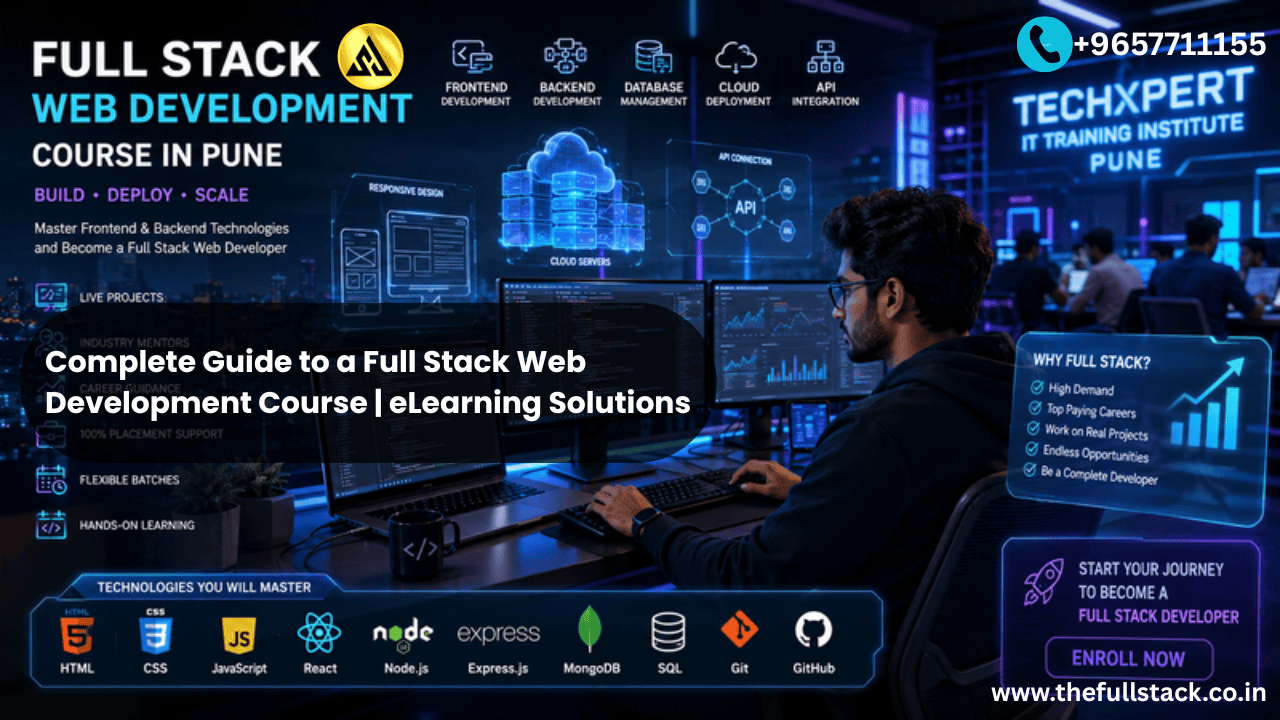
Complete Guide to a Full Stack Web Development Course | eLearning Solutions
Mastering Full Stack Web Development Course: Your Pathway to a Rewarding Career in IT
In the rapidly evolving digital landscape, web development has emerged as one of the most sought-after skills. Among various specializations, full stack web development stands out due to its versatility and demand. This comprehensive guide will delve into the essence of a full stack web development course, who it is suitable for, and why it matters in today’s tech-driven world.
What is Full Stack Web Development?
Understanding the Layers
Full stack web development encompasses a comprehensive understanding of both frontend and backend technologies. The frontend, also known as client-side, deals with the user interface, while the backend, or server-side, handles data processing and management.
The Importance of Full Stack Skills
Full stack developers are in high demand due to their ability to manage every aspect of a web application, from design to deployment. This versatility makes them valuable assets for businesses seeking to create robust and efficient online platforms.
Who Should Enroll in Full Stack Web Development Course?
Newcomers to Web Development
For those new to web development, a full stack course provides a comprehensive introduction to the field. It equips learners with the skills necessary to build and maintain complete web applications.
Experienced Developers Seeking Versatility
For developers already proficient in either frontend or backend, a full stack course offers the opportunity to expand their skillset and become more versatile in their work.
Why Full Stack Web Development Matters Today?
Growing Demand for Full Stack Developers
As businesses continue to rely on digital platforms, the demand for full stack developers is expected to grow. A full stack web development course equips learners with the skills necessary to meet this demand.
Versatility and Career Opportunities
Full stack developers are in high demand across various industries, offering a wide range of career opportunities. A full stack web development course can provide learners with the skills necessary to excel in this versatile field.
Exploring Full Stack Web Development Course Curriculum
Frontend Technologies
A full stack web development course typically covers frontend technologies such as HTML, CSS, JavaScript, and modern frameworks like React, Angular, or Vue.js.
Backend Technologies
Back-end technologies covered in a full stack course might include Node.js, Python, Ruby on Rails, PHP, or Java. Additionally, databases such as MySQL, MongoDB, and PostgreSQL are often included in the curriculum.
| Skill Level | Frontend Technologies | Backend Technologies |
|---|---|---|
| Entry-Level/Overview | HTML, CSS, JavaScript, React, Angular, Vue.js | Node.js, Python, Ruby on Rails, PHP, Java, MySQL, MongoDB, PostgreSQL |
By mastering both frontend and backend technologies, full stack developers are well-equipped to build complete web applications that meet the needs of businesses in a variety of industries.
[Blog content continues below…]
Top Web Development Languages and Frameworks in 2026
A Comprehensive Overview of the Most Popular Technologies Used in Full Stack Web Development
JavaScript: The Cornerstone of Modern Web Development
Understanding its Versatility and Importance in Building Dynamic Web Applications
React JS: The Front-End Revolutionizer
Exploring the Impact of React JS on User Interfaces and Its Role in Modern Web Development
Choosing the Right Full Stack Web Development Course in Pune
Comparing Top Training Institutes for a Comprehensive Learning Experience
Evaluating Factors such as Curriculum, Instructors, and Location to Find the Best Fit for Your Needs
Location Breakdown: The Advantages of Studying Full Stack Web Development in Pune
Highlighting the City’s Rich Tech Ecosystem and Opportunities for Career Growth
Key Factors to Consider When Choosing a Full Stack Web Development Course
Assessing Curriculum, Instructors, and Cost-Effectiveness for Optimal Learning Outcomes
Identifying the Essential Elements that Ensure Your Success in Becoming a Skilled Full Stack Developer
The Role of Practical Experience in Mastering Full Stack Web Development
Understanding the Importance of Hands-On Projects and Real-World Applications for Developing Expertise
**Career Growth Path in Full Stack Web Development**
Subheading 1 – Understanding the Role of a Full Stack Developer
A Full Stack Developer is a versatile professional who possesses both front-end and back-end development skills. They are responsible for creating and maintaining the entire web application, from user interface to server operations.
Tertiary Heading 1 – Front-End Development Skills
Front-End Development involves designing the visual elements of a website that users interact with directly. Essential skills include HTML, CSS, and JavaScript.
Tertiary Heading 2 – Back-End Development Skills
Back-End Development focuses on server-side operations, database management, and application logic. Important skills include SQL, Node.js, and Python.
Subheading 2 – Key Skills to Improve for Full Stack Web Development Success
To excel as a Full Stack Developer, continuous learning is crucial.
Tertiary Heading 1 – Mastering Versatile Languages
Learning versatile languages like JavaScript, Python, and Ruby can significantly boost your Full Stack Development career.
Tertiary Heading 2 – Understanding Frameworks and Libraries
Frameworks and libraries simplify development processes by providing pre-written code. Mastering popular ones such as React, Angular, and Express can set you apart in the industry.
**Perks and Benefits of Pursuing Full Stack Web Development**
Subheading 1 – Lucrative Career Opportunities
Full Stack Developers are in high demand, with numerous job opportunities available worldwide.
Tertiary Heading 1 – Competitive Salaries
The demand for Full Stack Developers has led to competitive salaries, often exceeding six figures in many countries.
Tertiary Heading 2 – Diverse Projects and Challenges
Diverse projects and challenges provide ample opportunities to grow professionally and showcase your skills.
Subheading 2 – Flexibility and Creativity
Full Stack Development allows for creativity in design and problem-solving, making it an exciting field for many developers.
Tertiary Heading 1 – Work on Various Technologies
With Full Stack Development, you’ll work with a wide range of technologies and tools, keeping your skills up-to-date and engaging.
Tertiary Heading 2 – Remote Work Opportunities
Remote work opportunities are increasingly common in the Full Stack Development field, offering flexibility for a better work-life balance.
Conclusion
Full Stack Web Development is an exciting and rewarding career path. With continuous learning, mastery of essential skills, and dedication to staying up-to-date with the latest technologies, you can achieve success in this ever-evolving field.
If you’re ready to take your web development skills to the next level, consider enrolling in a professional course at eLearning Solutions. Visit their website here to learn more about their Full Stack Web Development program and begin your journey towards a fulfilling career.
Frequently Asked Questions about Full Stack Web Development Course
What is a full stack web development course?
A full stack web development course covers both frontend (client-side) and backend (server-side) development aspects of web applications. It equips students with the necessary skills to create complete web solutions, including databases, APIs, and user interfaces.
Who can enroll in a full stack web development course?
Anyone with basic programming knowledge can enroll in a full stack web development course. Some prerequisites may include understanding of HTML, CSS, and JavaScript. Aspiring students should be familiar with problem-solving, critical thinking, and collaboration skills.
What technologies will I learn in a full stack web development course?
A comprehensive full stack web development course covers various technologies such as HTML, CSS, JavaScript, ReactJS, AngularJS, Node.js, MongoDB, Express.js, and RESTful APIs. The exact technologies may vary depending on the course syllabus.
How long does it take to complete a full stack web development course?
The duration of a full stack web development course can range from 6 months to 2 years, depending on the intensity and format (full-time or part-time). Shorter courses may provide an introduction to the subject matter, while longer programs offer in-depth coverage and hands-on experience.
What are the career opportunities after completing a full stack web development course?
After completing a full stack web development course, graduates can pursue careers as web developers, software engineers, or full stack developers. They may work for various organizations such as tech companies, startups, and e-commerce platforms.
What is the salary range for a full stack developer?
The salary range for a full stack developer can vary widely depending on factors like location, experience level, and industry. In the United States, entry-level full stack developers can expect to earn around $70,000 per year, while senior full stack developers can earn upwards of $120,000 annually.
Can I learn full stack web development online?
Yes, you can learn full stack web development online through various platforms such as Udemy, Coursera, and edX. Online courses offer flexibility in terms of pace, scheduling, and accessibility. However, it is important to choose a reputable course provider with experienced instructors.
How can I choose the right full stack web development course?
When choosing a full stack web development course, consider factors like the curriculum, instructors’ experience, course duration, pricing, and student reviews. It is also beneficial to research the course provider’s reputation in the industry and their alumni network.
Frequently Asked Questions
What is a full stack web development course and what will I learn?
A full stack web development course covers both front-end and back-end development, teaching you how to design and build a complete web application from scratch. You will learn programming languages such as HTML, CSS, JavaScript, and server-side languages like Python or Ruby. By the end of the course, you will have the skills to develop dynamic and interactive web applications.
Do I need to have prior programming experience to take this course?
No prior programming experience is required to take this course, as it is designed to be beginner-friendly and starts with the basics of web development. However, having some basic computer skills and a willingness to learn are necessary to succeed in the course. The course will guide you through each topic, from basic to advanced, to ensure you have a solid understanding of full stack web development.
How long does it take to complete the full stack web development course?
The duration of the course may vary depending on your pace and the amount of time you can dedicate to learning each week. On average, it can take around 3-6 months to complete the course, but some learners may finish it faster or slower. The course is designed to be flexible, allowing you to learn at your own pace and fit it into your schedule.
What kind of career opportunities are available to full stack web developers?
Full stack web developers are in high demand and can pursue a variety of career opportunities, including web developer, software engineer, and technical lead. With the skills learned in this course, you can work on a wide range of projects, from small businesses to large enterprises, and even start your own business as a freelance web developer. The job prospects for full stack web developers are excellent, with a high salary range and plenty of job openings.
What kind of support and resources are available to learners during the course?
Learners have access to a range of support and resources, including video lessons, interactive coding exercises, and a community forum where they can ask questions and get help from instructors and peers. The course also includes additional resources, such as eBooks, articles, and tutorials, to help learners deepen their understanding of web development concepts. If you get stuck or need help, you can reach out to the support team for assistance.
