
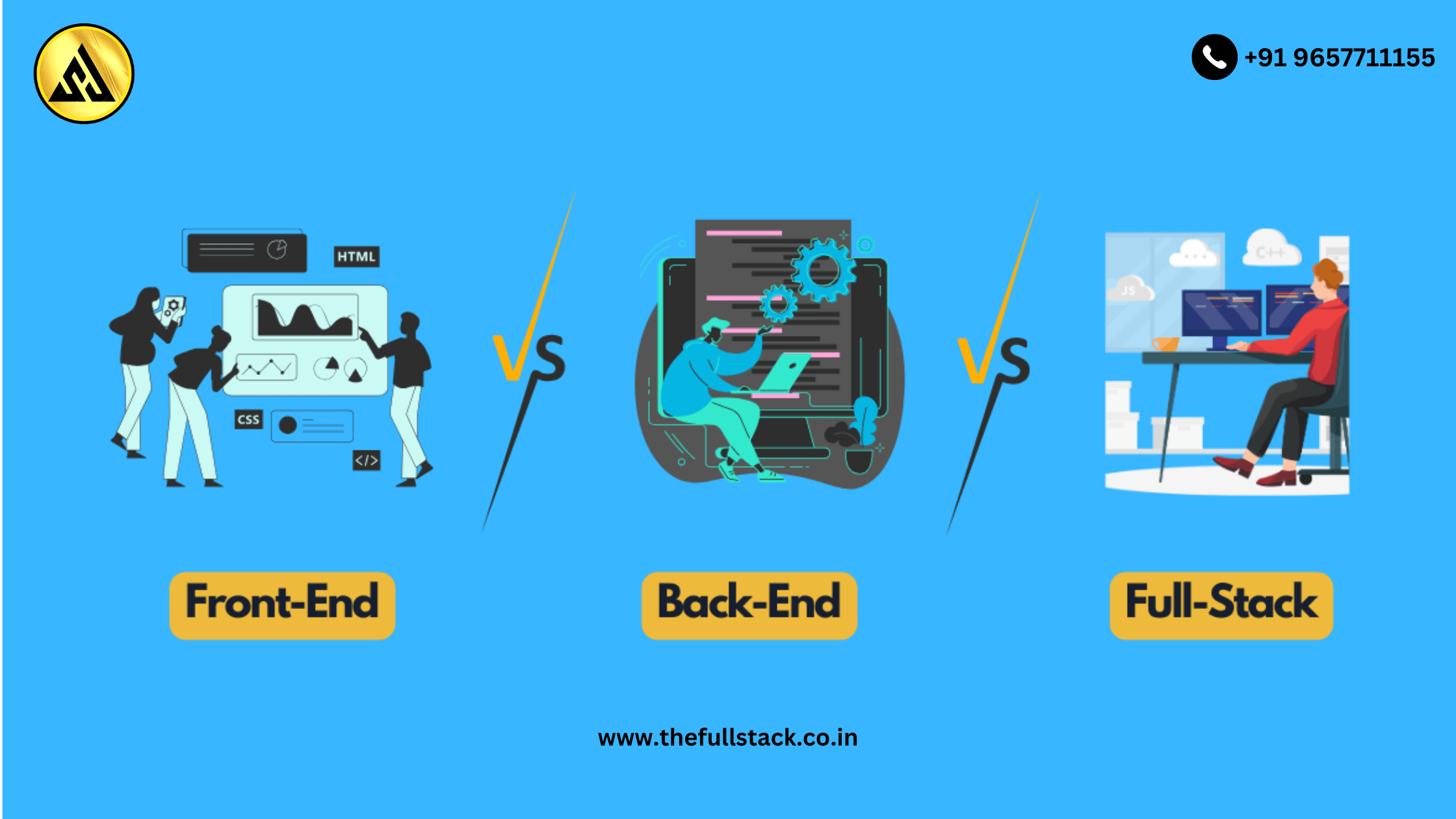
Frontend vs Backend vs Full Stack: What’s the Difference?
The field of web development is flourishing in the current digital era. You’ve undoubtedly heard of frontend, backend, and full stack whether you’re a student, computer enthusiast, or someone preparing to change careers. However, what do these actually mean? Let’s dissect it in a straightforward, approachable manner.
💻 What is Frontend Development?
Frontend development deals with everything you see and interact with on a website or web app. It’s the user interface (UI) and user experience (UX) layer.
✅ Key Responsibilities:
- Designing website layouts
- Making websites responsive across devices
- Ensuring smooth user interaction
- Styling with colors, fonts, buttons, etc.
🔧 Common Technologies:
- HTML – Creates the structure of the page
- CSS – Adds design and layout styles
- JavaScript – Adds interactivity
- Frameworks/Libraries – React.js, Angular, Vue.js
💡 Example:
When you click a button or fill a form on a website, that’s the frontend at work.
🖥️ What is Backend Development?
Backend development focuses on the behind-the-scenes functionality. It powers the logic, databases, and server communication.
✅ Key Responsibilities:
- Managing databases
- Creating APIs (Application Programming Interfaces)
- Authenticating users
- Storing and retrieving data
🔧 Common Technologies:
- Languages – Node.js, Python, Java, PHP, Ruby
- Databases – MySQL, MongoDB, PostgreSQL
- Frameworks – Express.js, Django, Laravel
💡 Example:
When you log in to a website, the backend checks your username and password and decides whether to allow access.
🔁 What is Full Stack Development?
Both front-end and back-end work are handled by a full stack developer. They can create whole web applications from scratch and possess a wide range of skills.
✅ Key Responsibilities:
- Designing user interfaces
- Writing backend logic
- Connecting frontend to backend via APIs
- Deploying apps to servers or the cloud
🔧 Common Full Stack Tech Stacks:
- MERN Stack – MongoDB, Express.js, React, Node.js
- MEAN Stack – MongoDB, Express.js, Angular, Node.js
- LAMP Stack – Linux, Apache, MySQL, PHP
💡 Example:
A full stack developer can build a social media website where users can sign up, post content, and interact—all by themselves.
📊 Key Differences at a Glance
| Feature | Frontend Developer | Backend Developer | Full Stack Developer |
| Focus | User Interface | Server, Database, Logic | Both Frontend & Backend |
| Tech Stack | HTML, CSS, JS, React, etc. | Node.js, Python, SQL, etc. | MERN, MEAN, Django + React, etc. |
| Tools Used | Figma, VS Code, Chrome DevTools | Postman, DB Tools, VS Code | All of the above |
| Salary (Approx.) | ₹4–10 LPA (India) | ₹5–12 LPA (India) | ₹6–15+ LPA (India) |
🎯 Which Path Should You Choose?
It depends on your interest:
- 👁️ Like designing and creating visual interfaces? Go for Frontend.
- 🧠 Love logic, data handling, and working behind the scenes? Choose Backend.
- 🔥 Want to be a versatile developer with high demand? Aim for Full Stack.
📌 Final Thoughts
In order to create contemporary online apps, each function is essential, regardless of whether you begin with front-end, back-end, or full stack development. Anyone can become proficient in these abilities with commitment and regular practice.
Are you prepared to begin your journey of personal growth?
you may be interested in this blog here:–
API-First Development and GraphQL: A Beginner’s Guide to the Future of APIs
Top 10 Backend Frameworks in 2025: Which One Should You Choose?
Frequently Asked Questions
What is the main difference between Frontend and Backend development?
Frontend development focuses on the client-side, creating the user interface and user experience, while Backend development focuses on the server-side, managing data and server logic. This separation allows for a clear division of labor and expertise. As a result, developers can specialize in one area or the other.
What does it mean to be a Full Stack developer, and what skills are required?
A Full Stack developer has the skills to work on both Frontend and Backend development, handling all layers of an application. This requires a broad range of skills, including programming languages, frameworks, and databases. Having Full Stack skills can be beneficial for working on smaller projects or for startups where resources are limited.
Do I need to learn both Frontend and Backend to become a successful web developer?
While it’s possible to specialize in either Frontend or Backend development, having some knowledge of both can be beneficial for understanding how the different parts of an application work together. However, it’s not necessary to be an expert in both areas to be successful. Focusing on one area and being proficient in it can still lead to a successful career.
How do I decide whether to focus on Frontend, Backend, or Full Stack development?
The choice between Frontend, Backend, or Full Stack development depends on your interests, skills, and career goals. If you enjoy working on user interfaces and user experience, Frontend might be the best choice. If you prefer working with data and server logic, Backend could be the way to go. If you’re interested in working on all aspects of an application, Full Stack might be the best fit.
Can I transition from Frontend to Backend or vice versa, and how difficult is it?
Yes, it’s possible to transition from Frontend to Backend or vice versa, but it may require learning new skills and technologies. The difficulty of the transition depends on your current level of experience and the amount of time you’re willing to dedicate to learning. With dedication and practice, you can make a successful transition and expand your skill set.

Leave a Reply