
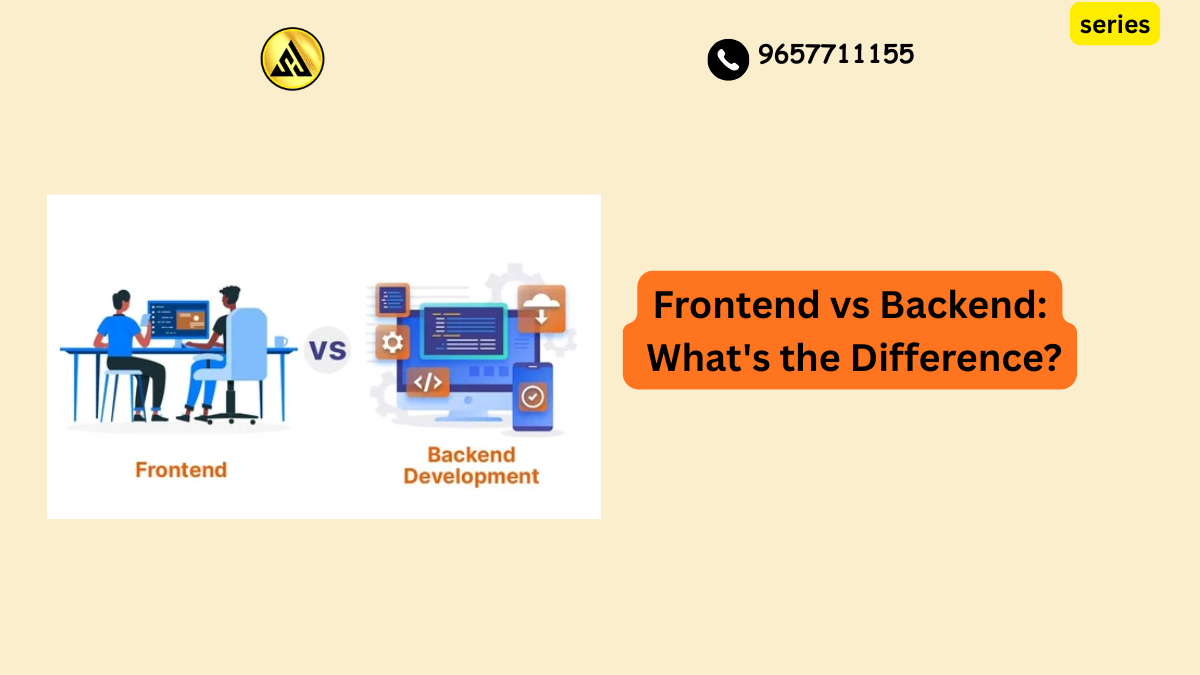
Frontend vs Backend
If you have ever browsed a website, clicked a button, or filled out a form online, you have interacted with both frontend and backend systems without even realizing it. These two terms come up constantly in web development conversations, yet many beginners and even some experienced professionals struggle to explain exactly what separates them. Understanding the difference between frontend and backend development is not just useful for aspiring developers. It also helps business owners, project managers, and anyone working in tech make smarter decisions about hiring, budgeting, and planning digital projects.
In this guide, we will break down what frontend and backend development actually mean, how they work together, the technologies involved, and which path might suit you if you are considering a career in web development.
What Is Frontend Development
Frontend development refers to everything a user sees and interacts with on a website or application. Think of it as the storefront of a shop. The colors, layout, buttons, images, fonts, and overall visual experience all fall under frontend development. When you scroll through an online store, click on a product image, or fill in a search bar, you are engaging directly with frontend code.
Frontend developers focus heavily on user experience and user interface design. Their job is to make sure a website looks appealing and functions smoothly across different devices and screen sizes. A poorly designed frontend can drive visitors away within seconds, even if the backend systems powering the site are flawless.
Core Technologies Used in Frontend Development
The three foundational building blocks of frontend development are HTML, CSS, and JavaScript.
HTML, or HyperText Markup Language, forms the skeleton of a webpage. It defines the structure, including headings, paragraphs, links, and images. Without HTML, a browser would not know how to display any content at all.
CSS, or Cascading Style Sheets, controls the visual presentation. This includes colors, spacing, fonts, animations, and responsive layouts that adjust based on whether someone is browsing on a phone, tablet, or desktop computer.
JavaScript adds interactivity. It allows buttons to respond when clicked, forms to validate input before submission, and content to update dynamically without refreshing the entire page. Modern frontend development often relies on JavaScript frameworks and libraries such as React, Vue, and Angular, which speed up development and make it easier to build complex, interactive interfaces.
Why Frontend Matters for Business Success
A strong frontend experience directly impacts conversion rates and customer satisfaction. For example, an ecommerce store with a confusing checkout process will lose sales regardless of how good its products are. On the other hand, a clean, fast loading, mobile friendly design encourages users to stay longer and complete desired actions, whether that means making a purchase, signing up for a newsletter, or filling out a contact form.
What Is Backend Development
While the frontend handles everything visible, the backend operates behind the scenes. It manages the logic, databases, servers, and application functionality that users never directly see but absolutely depend on. Going back to the shop analogy, the backend is like the warehouse, inventory system, and staff working behind the counter to make sure everything runs smoothly.
When you log into an account, submit a payment, or search for a product, backend systems process that request, retrieve or store data, and send the appropriate response back to the frontend for display.
Core Technologies Used in Backend Development
Backend development relies on server side programming languages such as Python, Java, PHP, Ruby, and Node.js. Each of these languages has its own strengths depending on the project requirements.
Databases play a critical role in backend systems. Popular options include MySQL, PostgreSQL, and MongoDB, which store everything from user profiles to product catalogs to transaction histories. Backend developers write queries to retrieve, update, and organize this data efficiently.
Servers and APIs, or Application Programming Interfaces, allow the frontend and backend to communicate. When a user clicks a button on the frontend, an API request is often sent to the backend, which processes the request and returns data that the frontend then displays.
Why Backend Matters for Business Success
A reliable backend ensures that applications run securely and efficiently, even under heavy traffic. Imagine an online banking app where transactions fail randomly or a social media platform that crashes every time too many users log in simultaneously. These failures stem from weak backend architecture. Strong backend systems handle data security, manage user authentication, and ensure that applications scale properly as user numbers grow.
Frontend vs Backend: Key Differences Explained
Now that we have covered the basics, let us compare frontend and backend development directly across several important factors.
Visibility
Frontend development is visible to users. Everything you see and click on a website falls under this category. Backend development is invisible. Users never directly interact with databases or server logic, but they certainly notice when something goes wrong, such as slow loading times or failed transactions.
Primary Focus
Frontend developers focus on design, usability, and user experience. Backend developers focus on data management, business logic, and system performance. Both roles require strong problem solving skills, but the nature of the problems differs significantly.
Languages and Tools
Frontend development primarily uses HTML, CSS, and JavaScript, along with frameworks like React or Vue. Backend development uses server side languages like Python, PHP, Java, or Node.js, paired with database management systems and server technologies.
Skill Set Requirements
Frontend developers need a good eye for design, understanding of user psychology, and knowledge of responsive design principles. Backend developers need strong logical thinking, understanding of databases, security practices, and server architecture.
Performance Considerations
Frontend performance affects how quickly a page loads and renders in a user’s browser. Backend performance affects how quickly the server processes requests and returns data. Both impact overall site speed, but from different angles.
How Frontend and Backend Work Together
Despite their differences, frontend and backend development are deeply connected. Neither can function effectively without the other. Consider a simple example: a user submitting a contact form on a website.
When someone fills out the form and clicks submit, the frontend captures that input through JavaScript. This data is then sent to the backend through an API request. The backend receives this information, validates it, stores it in a database, and may trigger an email notification. Finally, the backend sends a confirmation response back to the frontend, which displays a success message to the user.
This entire process happens within seconds, yet it requires seamless coordination between both sides of development. This is why many companies now look for full stack developers, professionals who understand both frontend and backend technologies and can build complete, functional applications independently.
Frontend vs Backend: Which Career Path Should You Choose
If you are considering a career in web development, choosing between frontend and backend often comes down to personal interests and strengths.
Choose Frontend Development If You Enjoy
You have a creative eye and enjoy visual design work. You like seeing immediate results from your code. You are interested in user psychology and how people interact with digital products. You prefer working closely with designers and marketing teams.
Choose Backend Development If You Enjoy
You enjoy solving complex logical problems. You are interested in databases, algorithms, and system architecture. You prefer working with data structures rather than visual elements. You want to understand how large scale systems handle millions of users.
Consider Full Stack Development If You Want
Full stack development offers flexibility and a broader skill set, making you valuable for startups and smaller teams where one person often handles multiple responsibilities. However, it also means dividing your learning time between two distinct skill areas, which can slow initial mastery of either side.
Common Myths About Frontend and Backend Development
There are several misconceptions worth addressing. Many people assume frontend development is easier than backend development simply because it deals with visuals rather than complex logic. In reality, modern frontend development involves intricate state management, performance optimization, and accessibility considerations that require deep technical knowledge.
Another common myth is that backend developers do not need design sense. While backend developers do not build user interfaces, understanding how their data structures and API responses affect frontend performance is crucial for creating efficient, well functioning applications.
Some also believe that learning one side automatically makes learning the other side easy. While there is overlap in problem solving approaches, the specific languages, tools, and mental models required for frontend versus backend work are genuinely different, and mastering both takes significant time and practice.
Practical Tips for Beginners Starting Their Web Development Journey
If you are just starting out, here are some actionable steps to help guide your learning path.
Start with HTML and CSS regardless of which path you eventually choose, since these fundamentals apply across all web development work and help you understand how websites are structured.
Build small projects early rather than only consuming tutorials. Creating a personal portfolio website, a simple to do list app, or a basic blog helps reinforce concepts far better than passive learning.
Learn JavaScript thoroughly if you are leaning toward frontend work, since it is the backbone of interactivity on the modern web. If backend work interests you more, pick one server side language like Python or Node.js and focus on mastering it before jumping between multiple languages.
Understand how APIs work, since this knowledge bridges both frontend and backend concepts and will make you more versatile regardless of which path you choose.
Join developer communities on platforms like GitHub, Stack Overflow, or relevant Discord servers. Learning alongside others, asking questions, and reviewing other people’s code accelerates growth significantly.
Final Thoughts
Frontend and backend development represent two essential halves of the same digital experience. Frontend development shapes what users see and how they interact with a website, while backend development powers the logic, data, and infrastructure working behind the scenes. Neither is inherently more important than the other, since both must work together seamlessly to create functional, reliable digital products.
Whether you are a business owner deciding how to staff your next project or an aspiring developer choosing your career path, understanding these differences equips you to make better, more informed decisions. As technology continues evolving, the line between frontend and backend occasionally blurs with full stack development and serverless architectures, but the core principles discussed here remain foundational to understanding how the web truly works.
Frequently Asked Questions
What is the main difference between frontend and backend development?
The main difference between frontend and backend development is that frontend focuses on the client-side of a website or application, dealing with user interface and user experience, while backend focuses on the server-side, handling data storage, processing, and retrieval. Frontend developers work on what users see and interact with, while backend developers work on the underlying logic and database integration. This separation of concerns allows for a more efficient and scalable development process.
Do I need to know both frontend and backend to be a full-stack developer?
Yes, to be a full-stack developer, you need to have a solid understanding of both frontend and backend development, as well as the ability to integrate them seamlessly. This means having knowledge of programming languages, frameworks, and tools used in both areas, such as HTML, CSS, JavaScript, and React for frontend, and languages like Java, Python, and Ruby, along with frameworks like Node.js and Ruby on Rails for backend. Having this broad range of skills allows full-stack developers to handle all aspects of a project.
Can I start with either frontend or backend development and then learn the other later?
Yes, you can start with either frontend or backend development and then learn the other later, as both areas have their own unique requirements and challenges. Many developers start with frontend development because it involves more visual and interactive elements, while others may prefer to start with backend development because it involves more logical and algorithmic thinking. Either way, learning one area first can provide a solid foundation for learning the other later.
How do frontend and backend developers work together in a team?
Frontend and backend developers work together in a team by collaborating on the design, development, and testing of a website or application, with frontend developers focusing on the user interface and user experience, and backend developers focusing on the server-side logic and database integration. They communicate regularly to ensure that the frontend and backend components are integrated correctly and function as expected, and they often work together to troubleshoot issues and optimize performance. This collaboration is essential for delivering a high-quality and seamless user experience.
Are there any tools or frameworks that can help bridge the gap between frontend and backend development?
Yes, there are many tools and frameworks that can help bridge the gap between frontend and backend development, such as Node.js, which allows developers to use JavaScript on both the client-side and server-side, and frameworks like React and Angular, which provide a structured approach to building frontend applications. Additionally, tools like GraphQL and RESTful APIs can help simplify the communication between frontend and backend components, making it easier to integrate them and build scalable and maintainable applications.
