


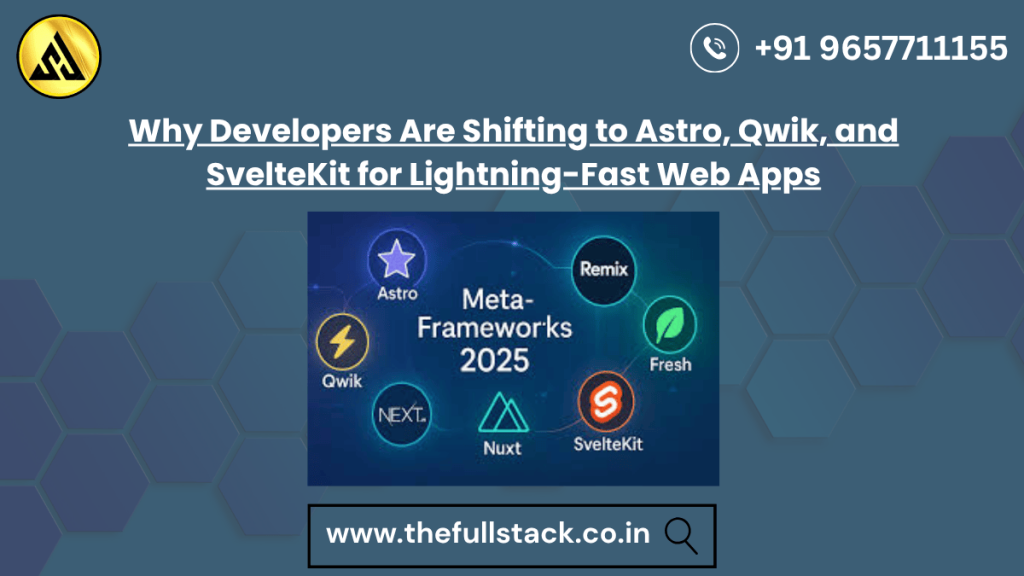
As the web development landscape evolves, speed, efficiency, and user experience have become non-negotiable. Today’s users expect websites to load instantly, perform seamlessly, and adapt fluidly across devices. Traditional JavaScript-heavy frameworks, while powerful, often struggle to keep pace with these demands. This is where new-generation frameworks like Astro, Qwik, and SvelteKit are rewriting the rules of front-end performance. Developers worldwide are embracing these technologies to craft lightning-fast, modern web apps that balance power with simplicity. Let’s explore why 2025 has become the tipping point for this transition—and what it means for the future of full-stack development.
The Performance Revolution: Why Speed Defines Modern Web Apps
The days when users tolerated a 3-second load time are long gone. Studies consistently show that even a one-second delay can impact conversions, user satisfaction, and SEO rankings. Frameworks like React or Vue, though mature, often send heavy JavaScript bundles to the client, slowing down time-to-interactive metrics. In contrast, Astro, Qwik, and SvelteKit represent a performance-first philosophy, focusing on delivering only what the browser truly needs.
Astro: The Content-Driven Speedster
Astro has quickly gained traction for its “Islands Architecture” approach. Instead of sending the entire page as a single JavaScript bundle, Astro renders most of the content as static HTML and hydrates only specific interactive components. This means pages load blazingly fast and feel lightweight, especially for content-rich sites like blogs, marketing pages, and documentation portals. Developers love its flexibility—Astro allows you to use React, Vue, Svelte, or even SolidJS inside the same project without performance penalties. With Astro 5.0’s latest updates, the framework now integrates seamlessly with modern deployment environments, edge functions, and serverless APIs, giving teams full-stack capabilities without the overhead.
Qwik: The Framework That “Resumes” Instead of Reloads
Qwik takes a revolutionary approach to front-end performance. Built by the creators of Angular and part of the Builder.io ecosystem, Qwik introduces the concept of “resumability.” Unlike traditional hydration, where the browser re-runs JavaScript to restore state, Qwik serializes the app’s state on the server and resumes execution from where it left off. The result? Near-instant page loads, regardless of app complexity. Developers working with Qwik in 2025 are finding that it dramatically reduces JavaScript shipped to the client and improves Core Web Vitals—metrics Google uses to measure real-world performance. It’s ideal for eCommerce, dashboards, and apps that require dynamic interactivity without trade-offs.
SvelteKit: The Developer’s Delight
SvelteKit builds on the beloved Svelte framework, known for its compile-time magic. Instead of running a virtual DOM like React or Vue, Svelte converts your code into highly optimized vanilla JavaScript at build time. The result is smaller bundles, faster performance, and a simpler developer experience. SvelteKit extends this by adding routing, server-side rendering (SSR), and API integration out of the box. With the introduction of Svelte 5 and the Runes API, SvelteKit apps are now even more reactive and lightweight. Developers appreciate its minimal syntax, built-in TypeScript support, and ability to integrate seamlessly with Node, Deno, or edge platforms like Vercel and Cloudflare Workers.
How These Frameworks Compare: Astro vs Qwik vs SvelteKit
Each of these frameworks brings unique strengths to the table. Astro shines for static and content-heavy sites, Qwik leads in dynamic web apps that prioritize interactivity, and SvelteKit offers an all-rounder balance for both. Let’s look at how they stack up across key factors.
1. Rendering Strategy
Astro: Static-first with partial hydration. Qwik: Resumable apps with zero rehydration cost. SvelteKit: Hybrid SSR/CSR rendering with preloading.
2. Performance
Astro delivers unmatched initial load times. Qwik excels in dynamic app scenarios with minimal JavaScript execution. SvelteKit offers balanced performance with elegant transitions and reactivity.
3. Developer Experience
Astro’s flexibility appeals to multi-framework teams. Qwik introduces new concepts but rewards learning with superior performance. SvelteKit provides the smoothest DX thanks to its simplicity and reactive syntax
4. Ecosystem and Adoption
In 2025, SvelteKit’s ecosystem continues to grow rapidly with corporate adoption. Astro is favored by agencies building static-first sites. Qwik is making waves in performance-critical applications and large-scale projects.
Why the Shift Matters for the Future of Web Development
The migration to Astro, Qwik, and SvelteKit is more than a trend—it’s a reflection of how developers and companies are rethinking the modern web. Businesses want fast, maintainable, and SEO-friendly solutions that scale effortlessly. These frameworks deliver that by focusing on compile-time optimization, minimal client-side overhead, and smooth developer workflows. Moreover, with Google’s emphasis on Core Web Vitals and user experience as ranking factors, adopting performance-first frameworks directly influences visibility and engagement. For developers, learning these tools now means staying ahead in a market that increasingly rewards innovation and speed.
Real-World Use Cases and Success Stories
Companies like Netlify, Vercel, and Builder.io have actively promoted these frameworks through integrations and real-world case studies. For instance, large documentation sites migrated from Gatsby to Astro and saw up to 70% faster load times. ECommerce platforms adopting Qwik reported significant improvements in conversion rates due to better mobile performance. Meanwhile, startups using SvelteKit have reduced their development time and complexity, allowing smaller teams to compete with enterprise-grade applications.
How to Choose the Right Framework for Your Next Project
If your goal is to build lightning-fast, content-heavy sites—choose Astro. If you need interactive dashboards, dynamic UIs, or personalized apps that scale efficiently—Qwik is your go-to. And if you want a full-stack experience that balances performance with developer happiness, SvelteKit might be the perfect fit. The best part? All three frameworks integrate seamlessly with modern backends, APIs, and cloud deployments, making them future-proof choices for 2025 and beyond.
Empowering the Next Generation of Developers
For beginners entering web development, these frameworks offer a new way of thinking—one that prioritizes performance, scalability, and user-centric design. Understanding how Astro, Qwik, and SvelteKit work will not only future-proof your career but also help you build experiences that truly delight users. Whether you’re a solo developer or part of a growing tech team, embracing these tools today means leading the charge in tomorrow’s web.
Taking the Next Step
Now is the best time to start learning Astro, Qwik, and SvelteKit. Explore our in-depth tutorials, performance optimization guides, and online courses to level up your full-stack development skills. Build faster, deploy smarter, and join the movement shaping the next era of the web.
You also like this:-
Introduction to Serverless Databases: Firebase, AWS DynamoDB, & More
Top 1Backend Frameworks in 2025: Which One Should You Choose
As the adoption of Astro, Qwik, and SvelteKit continues to grow, it’s essential to consider the long-term implications for full-stack development. With the emphasis on performance and user experience, developers must balance the need for speed with the requirement for seamless interactivity. By understanding the strengths and weaknesses of each framework, developers can make informed decisions about which technology to use for their next project, whether it’s a content-rich blog, an eCommerce platform, or a complex web application.
The future of front-end development is undoubtedly tied to the evolution of Astro, Qwik, and SvelteKit. As these frameworks continue to mature, we can expect to see even more innovative solutions to the challenges of modern web development. Whether you’re a seasoned developer or just starting out, now is the perfect time to explore the possibilities of these performance-first frameworks and discover how they can help you create faster, more efficient, and more user-friendly web applications that meet the demands of today’s users and tomorrow’s technologies.
As developers, we’re constantly seeking ways to optimize our applications for better performance and user experience. Astro, Qwik, and SvelteKit are leading the charge in this area, with innovative approaches to rendering, hydration, and state management. By leveraging these frameworks, we can create lightning-fast web apps that meet the evolving demands of modern users. Whether you’re building a content-rich blog, a dynamic eCommerce platform, or a complex dashboard, these frameworks offer the tools and flexibility to deliver exceptional results.
In addition to their technical advantages, Astro, Qwik, and SvelteKit also offer significant benefits for SEO and Core Web Vitals. By prioritizing performance and user experience, we can improve our search engine rankings, increase conversions, and drive more traffic to our websites. As the web development landscape continues to evolve, it’s essential to stay ahead of the curve and explore the latest innovations in front-end performance. With Astro, Qwik, and SvelteKit, we have the tools to create faster, more efficient, and more user-friendly web apps that meet the needs of modern users.
Frequently Asked Questions
What are the key differences between Astro, Qwik, and SvelteKit?
Astro, Qwik, and SvelteKit are all fast frameworks, but they differ in their approach to building applications. Astro focuses on static site generation, Qwik is designed for server-side rendering, and SvelteKit is a full-stack framework. Each framework has its own strengths and use cases, making the choice dependent on the project’s specific needs.
Which framework is the fastest for building web applications?
The fastest framework for building web applications depends on various factors, including the complexity of the application, the size of the team, and the desired outcomes. Qwik is known for its exceptional performance, but Astro and SvelteKit can also deliver fast and efficient results with the right implementation. Ultimately, the choice of framework should be based on the project’s requirements and the team’s expertise.
Is Astro suitable for large-scale enterprise applications?
Astro can be used for large-scale enterprise applications, but it may require additional setup and configuration to handle complex requirements. Astro’s strengths lie in its ability to handle static site generation and server-side rendering, making it a good choice for applications with a strong focus on content and SEO. However, for highly complex applications, SvelteKit or Qwik might be more suitable due to their full-stack capabilities.
Can I use Qwik with existing backend infrastructure?
Yes, Qwik can be used with existing backend infrastructure, as it is designed to be flexible and adaptable to different environments. Qwik’s server-side rendering capabilities make it easy to integrate with existing backend systems, and its API-first approach allows for seamless communication with other services. This makes Qwik a good choice for teams looking to modernize their existing applications without replacing the entire backend infrastructure.
How does SvelteKit’s performance compare to Astro and Qwik?
SvelteKit’s performance is comparable to Astro and Qwik, as all three frameworks are designed for speed and efficiency. SvelteKit’s full-stack approach and built-in optimization features make it a strong contender for applications that require both client-side and server-side rendering. However, the actual performance will depend on the specific implementation, and teams should consider factors like code quality, optimization, and deployment strategies when evaluating the performance of each framework.