


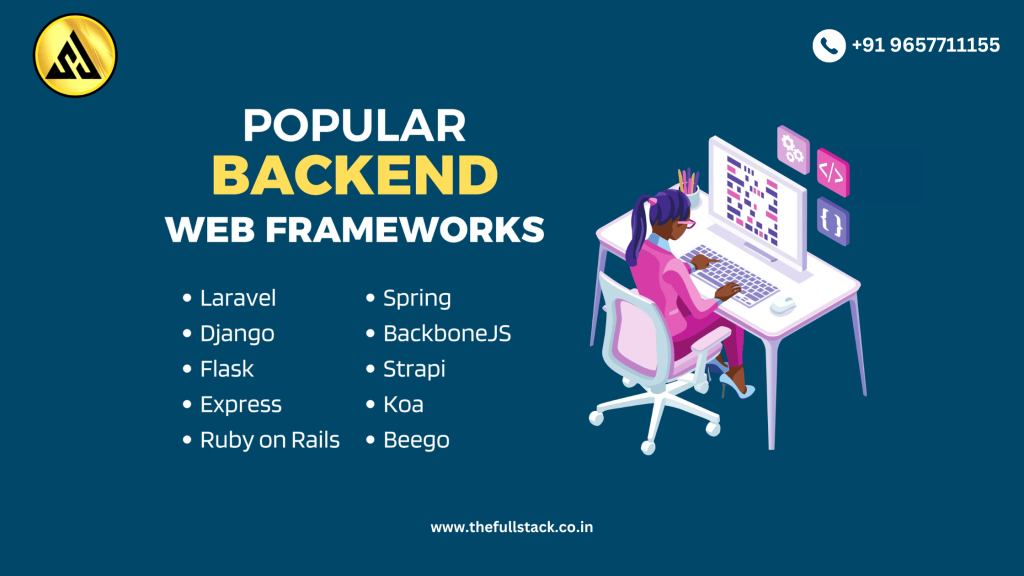
Do you want to learn more about backend development but are intimidated by the options? You’re not by yourself! With the speed at which technology is developing, selecting the best backend framework can have a significant impact on both your professional and business success. We’ll examine the top 10 backend frameworks of 2025, discuss their significance, and assist you in selecting the best one for your needs in this guide.
Why Backend Frameworks Matter?
Web applications are built on backend frameworks, which manage server logic, database interactions, authentication, and other tasks. Speed, security, and scalability—all essential in the rapidly evolving digital world of today—are guaranteed by a strong backend.
Top 10 Backend Frameworks to Watch in 2025
1. Node.js (Best for JavaScript Developers)
- Market Trend: Because of its extensive NPM ecosystem and non-blocking architecture, it continues to lead.
- Perfect For: API development, microservices, and real-time applications.
- For instance, Node is used by businesses like LinkedIn and Netflix. their backend using JavaScript.
2. Django (Python’s Powerhouse)
- The market is expanding as a result of Python’s growing use in data science and artificial intelligence.
- Perfect For: Web apps that are scalable and secure.
- For instance, Django is used by Spotify and Instagram for their backend services.
3. Ruby on Rails (Rapid Development Champion)
- Market Trend: Its convention-over-configuration strategy keeps luring new businesses.
- Perfect for: Quick MVP creation and prototyping.
- For instance, Ruby on Rails is the foundation of GitHub and Shopify.
4. Spring Boot (Java’s Enterprise Solution)
- Market Trend: Because of its scalable and reliable uses, big businesses like it.
- Perfect For: Microservices and enterprise-level apps.
- For instance, banks and other financial organizations all around the world use it.
5. Laravel (PHP’s Best Bet)
- Market Trend: With its sophisticated syntax and robust features, it dominates the PHP ecosystem.
- Perfect For: Web apps that require database administration, caching, and authentication.
- For instance, systems like MyRank and Invoice Ninja are powered on Laravel.
6. FastAPI (For High-Performance APIs)
- Market Trend: Due to its speed and asynchronous capabilities, it is becoming more and more popular.
- Perfect for: Developing GraphQL and RESTful APIs.
- Example: Employed by AI startups and data-driven applications.
7. Express.js (Minimalist yet Powerful)
- Market Trend: Due to its speed and asynchronous capabilities, it is becoming more and more popular.
- Perfect for: Developing GraphQL and RESTful APIs.
- Example: Employed by AI startups and data-driven applications.
8. Flask (Micro but Mighty Python Framework)
- Market Trend: Favored for rapid prototyping and lightweight applications.
- Perfect For: Simple applications with modest needs.
- Example: Applied to IoT solutions and AI-based applications.
9. NestJS (Scalable Node.js Framework)
- Market Trend: Growing in popularity due to its TypeScript compatibility and modular design.
- Perfect For: Maintainable, enterprise-level apps.
- For instance, businesses in the healthcare and financial sectors use NestJS to scale.
10. ASP.NET Core (Microsoft’s Secure and Fast Solution)
- Market Trend: Remains a popular option for Windows-based businesses.
- Perfect For: Microservices and cloud apps.
- For instance, Fortune 500 businesses use it for applications requiring a high level of security.
Which One Should You Choose?
If you’re a beginner, start with a framework that aligns with the programming language you’re comfortable with. Node.js, Django, and Laravel are great choices for getting started. If you’re working in an enterprise environment, Spring Boot and ASP.NET Core are solid options.
Real-World Impact: Why Learning Backend Development Matters
The backend powers businesses. From handling transactions on e-commerce sites to ensuring data security in banking apps, backend frameworks drive the modern web. Learning backend development can open doors to high-paying jobs, freelancing opportunities, and even your own startup.
Take the First Step!
It’s time to act now that you are aware of the best backend frameworks! Build projects, begin with tutorials, and acquire practical experience.
Concluding remarks There is a lot of career potential in the fascinating topic of backend programming. Knowing the newest frameworks can help you stand out, whether you’re an employee trying to advance your career or an aspiring developer. Continue to learn, stay ahead of the curve, and create the web of the future!
You might be like this:
SQL vs. NoSQL: Key Differences Explained
Frequently Asked Questions
What are the key factors to consider when choosing a backend framework in 2025?
When selecting a backend framework, consider factors such as performance, security, scalability, and ease of development. Additionally, think about the specific needs of your project, including the type of application, expected traffic, and required features. This will help you narrow down the options and choose the best framework for your needs.
How do I determine which backend framework is best for my project’s specific needs?
Evaluate your project’s requirements and research the strengths and weaknesses of each framework. Consider factors such as the type of database, caching mechanisms, and support for real-time updates. You can also look at case studies, benchmarks, and reviews from other developers to get a better understanding of each framework’s capabilities.
Are there any significant differences between the top backend frameworks in terms of learning curve and community support?
Yes, the top backend frameworks vary in terms of learning curve and community support. Some frameworks, such as Express.js and Django, have large and established communities, making it easier to find resources and support. Others, such as Laravel and Ruby on Rails, may have a steeper learning curve but offer robust documentation and active communities.
Can I use multiple backend frameworks for a single project, and if so, how do I integrate them?
Yes, it is possible to use multiple backend frameworks for a single project, a approach known as a microservices architecture. To integrate multiple frameworks, you can use APIs, message queues, or other communication mechanisms to enable communication between services. However, this approach requires careful planning and management to ensure seamless integration and minimize complexity.
How do I stay up-to-date with the latest developments and trends in backend frameworks?
To stay current with the latest developments and trends in backend frameworks, follow industry leaders and developers on social media, attend conferences and meetups, and participate in online forums and communities. You can also subscribe to newsletters, blogs, and podcasts that focus on backend development and framework updates. Additionally, consider taking online courses or tutorials to learn new skills and stay ahead of the curve.