


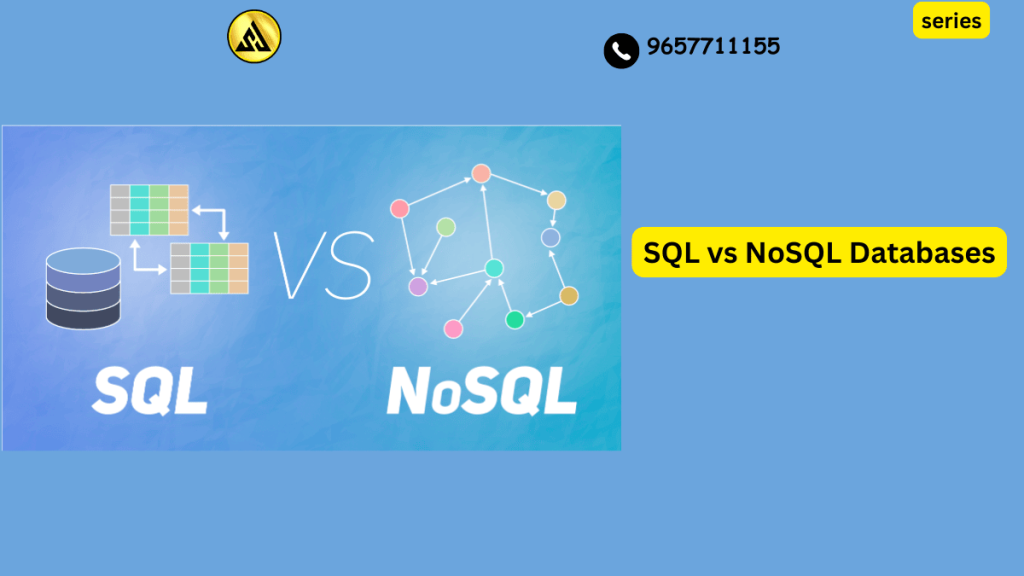
Every developer eventually hits the same wall early in a project. You are sitting there with a data model in your head, a rough idea of how your application will grow, and one nagging question that refuses to go away. Should this project run on a SQL database or a NoSQL database. It sounds like a simple technical decision, but it shapes almost everything that comes after it, from how you write queries to how easily your application scales when real users start showing up.
This debate has been going on for well over a decade, and it is not going away anytime soon. Both approaches have matured significantly, both have passionate communities behind them, and both are genuinely excellent choices depending on what you are building. The goal here is not to declare a winner, because there isn’t one. The goal is to help you understand exactly what separates these two database philosophies so you can make a decision that actually fits your project instead of just following whatever is trending on developer forums this year.
What Is a SQL Database
SQL databases, also called relational databases, organize data into tables made up of rows and columns, similar to a spreadsheet. Each table represents a specific type of entity, such as customers, orders, or products, and relationships between these tables are defined using keys. This is where the term relational comes from. A customer table might connect to an orders table through a customer ID, allowing you to pull related information across multiple tables using structured queries.
Popular SQL databases include MySQL, PostgreSQL, Microsoft SQL Server, and Oracle Database. These systems use Structured Query Language, commonly known as SQL, to create, read, update, and delete data. SQL has been around since the 1970s, and its longevity is not an accident. It is predictable, well documented, and incredibly good at handling structured data with clear relationships.
What Is a NoSQL Database
NoSQL databases took a different approach, built specifically to handle data that does not fit neatly into rows and columns. Instead of rigid tables, NoSQL databases store data in flexible formats like documents, key value pairs, wide columns, or graphs. This flexibility makes them a natural fit for applications dealing with rapidly changing data structures or massive volumes of unstructured information.
Some of the most widely used NoSQL databases include MongoDB, which stores data as JSON like documents, Redis, a key value store known for its speed, Cassandra, a wide column store built for large scale distributed systems, and Neo4j, a graph database designed for highly connected data like social networks. Each of these serves a very different purpose, which is actually one of the most important things to understand about NoSQL as a category.
The Core Difference Between SQL and NoSQL
The fundamental difference comes down to how data is structured and how it scales. SQL databases enforce a defined schema, meaning every row in a table must follow the same structure. This makes data consistent and easy to query using relationships, but it also means changing that structure later can be a slow and sometimes painful process.
NoSQL databases are schema flexible. You can add new fields to a document without touching every other record in the collection. This makes NoSQL a great fit for applications where the data model evolves quickly, such as early stage startups still figuring out their product, or applications ingesting data from multiple unpredictable sources.
Structure and Schema
Think about an ecommerce platform. In a SQL database, you would likely have separate tables for customers, orders, products, and payments, all connected through foreign keys. Every order record follows the exact same structure, which makes reporting and financial reconciliation reliable and predictable.
In a NoSQL document database, you might store an entire order, including customer details, items purchased, and shipping information, as a single JSON document. This means one query can pull everything related to that order without joining multiple tables. It is faster for that specific use case, but it can lead to duplicated data across documents, which requires careful planning to manage.
Scalability Approaches
SQL databases traditionally scale vertically, meaning you make a single server more powerful by adding more CPU, memory, or storage. This works well up to a point, but eventually you hit a ceiling, and vertical scaling becomes expensive fast.
NoSQL databases were built with horizontal scaling in mind from day one. Instead of making one server bigger, you add more servers to the system, and the database distributes data across them automatically. This is a big reason why companies handling massive amounts of traffic, like social media platforms or large scale IoT systems, often lean toward NoSQL solutions.
It is worth noting that modern SQL databases have closed this gap significantly. PostgreSQL, for example, now supports various forms of horizontal scaling through extensions and clustering tools, so this is no longer a strict SQL versus NoSQL limitation the way it was ten years ago.
Consistency and Data Integrity
This is where SQL databases really shine. Relational databases follow ACID properties, which stands for atomicity, consistency, isolation, and durability. In plain terms, this means transactions either complete fully or not at all, and your data stays accurate even if something goes wrong midway through an operation. This matters enormously for financial systems, inventory management, and anything where partial or incorrect data could cause real problems.
Many NoSQL databases prioritize a different set of tradeoffs, often described by the CAP theorem, which states that a distributed system can only guarantee two out of three properties, consistency, availability, and partition tolerance. Some NoSQL databases favor availability and speed over strict consistency, using a model called eventual consistency, where data will be accurate across the system eventually, just not necessarily the instant it is written. This is perfectly fine for something like a social media like counter, but it would be a serious problem for a bank balance.
When SQL Is the Better Choice
There are certain project types where SQL databases are almost always the right call. If your application involves complex relationships between different types of data, such as an accounting system, a hospital records platform, or an inventory management tool, SQL is going to serve you better. The ability to run complex joins across multiple tables and enforce strict data integrity rules is difficult to replicate cleanly in a NoSQL environment.
SQL is also the stronger choice when your data structure is well understood from the start and unlikely to change dramatically. If you already know your entities and how they relate to each other, a relational database gives you strong guarantees and mature tooling for reporting, analytics, and business intelligence.
When NoSQL Is the Better Choice
NoSQL tends to make more sense when your application deals with large volumes of unstructured or semi structured data, or when your data model is expected to evolve quickly. A good example is a content management system where different types of content, like articles, videos, and product listings, all have different fields and structures. Forcing all of that into rigid SQL tables can get messy fast.
NoSQL also becomes attractive when horizontal scalability is a top priority from the beginning. If you are building something you expect to grow into millions of users across multiple regions, a distributed NoSQL database like Cassandra or DynamoDB can handle that kind of scale more naturally than a traditional relational setup.
Real time applications also benefit from certain NoSQL databases. Redis, for instance, is commonly used for caching, session management, and real time leaderboards because of its in memory speed. These are not use cases where you need complex relational queries, you just need extremely fast reads and writes.
Common Misconceptions Worth Clearing Up
One persistent myth is that NoSQL is always faster than SQL. This is not universally true. Speed depends entirely on the use case, the query patterns, and how well the database is optimized. A properly indexed SQL database can outperform a poorly designed NoSQL setup, and vice versa.
Another misconception is that SQL databases cannot handle large scale applications. Companies like Instagram and Discord have historically used PostgreSQL at massive scale, proving that relational databases can absolutely handle high traffic environments when architected correctly.
There is also a common belief that you must pick one or the other for an entire project. In reality, many modern applications use both. This is sometimes called polyglot persistence. A company might use PostgreSQL for core transactional data like user accounts and payments, while using Redis for caching and MongoDB for storing flexible content like user generated posts or logs. Choosing the right tool for each specific job often produces better results than trying to force one database type to handle everything.
Practical Tips for Making the Right Choice
Start by mapping out your data relationships before writing a single line of database code. If you find yourself drawing a lot of connections between entities, that is a strong signal SQL will serve you well.
Consider how often your data structure is likely to change. Early stage products with uncertain requirements often benefit from the flexibility of NoSQL, while mature products with well defined data models tend to benefit from the structure and integrity of SQL.
Think about your team’s existing expertise. A team experienced in relational database design will build a more reliable and maintainable system with SQL than forcing themselves to learn a new NoSQL paradigm under a tight deadline, and the reverse is true as well.
Do not choose a database based purely on hype or what a well known tech company uses. Netflix, Amazon, and Google use a wide range of databases depending on the specific problem they are solving internally. Your project’s needs are different from theirs, and your choice should reflect your actual requirements, not someone else’s engineering blog post.
Finally, prototype with real data whenever possible. Theoretical decisions made on a whiteboard often look very different once you are working with actual query patterns and realistic data volumes. A short proof of concept using both approaches can reveal issues you would not have anticipated otherwise.
Final Thoughts
SQL and NoSQL databases are not competitors fighting for the same throne, they are different tools built for different problems. SQL offers structure, strong consistency, and powerful relational querying, making it ideal for applications where data integrity and complex relationships matter most. NoSQL offers flexibility, horizontal scalability, and speed, making it a strong fit for applications dealing with unstructured data or massive distributed scale.
The best engineers do not pick a side in this debate, they pick the right database for the specific problem in front of them. Understanding the strengths and tradeoffs of each approach is what actually separates a well architected system from one that struggles under real world pressure. Take the time to understand your data, your scaling needs, and your team’s strengths, and the right choice will usually become clear on its own.
Frequently Asked Questions
What is the main difference between SQL and NoSQL databases?
SQL databases are relational, meaning they use structured query language to manage data, whereas NoSQL databases are non-relational, using a variety of data models such as key-value, document, or graph. This difference affects how data is stored, retrieved, and manipulated. SQL databases are ideal for complex transactions, while NoSQL databases are better suited for handling large amounts of unstructured data.
When should I choose a SQL database over a NoSQL database?
You should choose a SQL database when your application requires complex transactions, strict data consistency, and adherence to a predefined schema. SQL databases are also a better choice when working with structured data, such as financial transactions or customer information. Additionally, SQL databases provide better support for ACID compliance, which ensures database reliability and consistency.
What are the advantages of using a NoSQL database?
NoSQL databases offer several advantages, including flexibility, scalability, and high performance. They allow for dynamic schema changes, which makes them ideal for handling large amounts of unstructured or semi-structured data. NoSQL databases also provide better support for big data and real-time web applications, making them a popular choice for modern web development.
Can I use both SQL and NoSQL databases in the same application?
Yes, it is possible to use both SQL and NoSQL databases in the same application, a approach known as a polyglot persistence architecture. This allows you to leverage the strengths of each type of database, using SQL for complex transactions and structured data, and NoSQL for handling large amounts of unstructured or semi-structured data. This approach can provide greater flexibility and scalability, but also adds complexity to the application.
How do I determine which type of database is best for my specific use case?
To determine which type of database is best for your specific use case, consider the type of data you will be working with, the complexity of your transactions, and the scalability requirements of your application. You should also evaluate the development and maintenance costs, as well as the expertise of your development team. By carefully evaluating these factors, you can choose the database that best fits your needs and provides the most value for your application.