


In today’s hyperconnected digital world, users expect instant feedback, seamless interactions, and dynamic updates without waiting for page reloads. Whether it’s watching a live sports score update, trading stocks, chatting with friends, or monitoring IoT sensors, real-time responsiveness has become the new standard. Building such applications used to be complex and resource-heavy, but modern web technologies like WebSockets, edge caching, and live data feeds have made real-time experiences not only achievable but also scalable and cost-effective. This combination forms the backbone of what we call real-time apps with WebSockets, a cornerstone of the modern web experience.
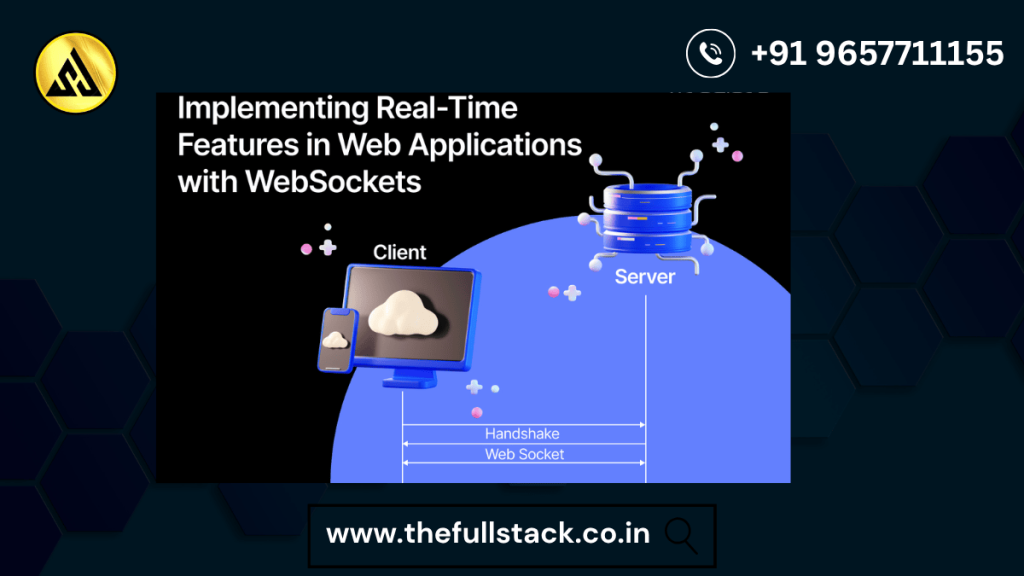
Imagine opening a stock trading dashboard where prices update the moment markets move, or collaborating in an online document where changes appear instantly across all screens. These capabilities rely on persistent, bidirectional communication between client and server—something HTTP alone can’t handle efficiently. That’s where WebSockets come in. Unlike traditional HTTP, which works on a request-response model, WebSockets establish a continuous connection that remains open, allowing data to flow both ways in real time. The result is low latency, minimal overhead, and seamless synchronization of data across multiple users and devices.
But WebSockets alone are not enough to power high-performance real-time apps at scale. To truly achieve speed and global reach, developers need to leverage edge caching—a technique that distributes data across servers located closer to end users. When combined with WebSockets, edge caching ensures that live data updates are delivered with minimal delay, no matter where your users are located. For instance, a multiplayer gaming platform can update player positions, scores, and actions instantly by maintaining real-time connections at edge nodes, ensuring consistent experiences for players across continents.
Edge computing also plays a crucial role in reducing server load and network congestion. By processing and caching frequently accessed data closer to the source, applications minimize round-trip times and reduce reliance on centralized servers. This approach not only enhances performance but also improves reliability, as local nodes can continue serving users even when central systems experience temporary downtime.
Then comes the magic ingredient: live data feeds. A live data feed provides a continuous stream of updated information—be it financial market data, logistics tracking, or social media analytics—that users can access instantly. When integrated with WebSockets and edge caching, live data feeds enable developers to create immersive, responsive applications where every user action triggers an immediate visual update. Think of dashboards that refresh automatically, chat systems that feel human-like in responsiveness, or IoT networks that deliver real-time sensor readings to operators in the field.
From a developer’s perspective, building such real-time apps has become significantly easier with the rise of modern frameworks and cloud platforms. Services like AWS AppSync, Firebase Realtime Database, and Azure Web PubSub simplify WebSocket-based communication, while CDNs such as Cloudflare and Akamai enable edge caching at scale. For enterprises already leveraging SAP or similar ecosystems, integrating WebSockets and live data into business workflows can revolutionize how employees and customers interact with data. A manufacturing dashboard powered by SAP could, for example, display machine performance metrics in real time, alert engineers to anomalies instantly, and trigger automated maintenance workflows—turning reactive processes into proactive ones.
The combination of WebSockets, edge caching, and live data feeds also enhances digital transformation initiatives by bridging the gap between IT and operational technologies. Real-time apps built on these technologies allow decision-makers to visualize trends, predict outcomes, and act immediately, reducing delays and boosting efficiency. In industries like logistics, healthcare, finance, and e-commerce, milliseconds matter—and this architecture ensures that every interaction counts.
From a business standpoint, adopting real-time app architecture brings measurable ROI. Faster updates mean better user engagement, lower bounce rates, and higher satisfaction. In e-commerce, for instance, instant inventory updates prevent customers from ordering out-of-stock items. In finance, traders gain an edge through up-to-the-second insights. In customer service, live dashboards allow teams to monitor issues as they arise and resolve them proactively. The outcome is a faster, smarter, and more connected enterprise ecosystem.
Technically, implementing real-time apps with WebSockets requires a solid understanding of event-driven architectures. Instead of waiting for user requests, your server continuously pushes updates as soon as new data becomes available. This can be further optimized using publish-subscribe models, where clients subscribe to specific topics or channels and receive updates only when relevant changes occur. When combined with edge caching, these updates are distributed efficiently, reducing latency even further. The end result is a smooth, uninterrupted experience where users feel like the app is reacting instantly to their actions.
Of course, challenges exist—scaling WebSocket connections to millions of users, managing state across distributed servers, and maintaining security are all important considerations. Fortunately, modern cloud providers and frameworks offer solutions like connection pooling, token-based authentication, and message queuing to address these issues. Developers can also leverage APIs and libraries such as Socket.IO or SignalR, which abstract much of the complexity and allow teams to focus on building engaging real-time features rather than low-level infrastructure management.
The evolution of real-time apps with WebSockets is closely tied to emerging technologies such as 5G and edge AI. With faster network speeds and smarter edge devices, the future of real-time computing is moving closer to the user than ever before. Imagine smart cities where traffic lights adapt to real-time congestion data, factories that self-optimize based on machine learning models running at the edge, or retail platforms that update pricing dynamically based on live demand. These possibilities are not futuristic dreams—they are unfolding today, powered by the convergence of WebSockets, live data, and edge computing.
For beginners eager to explore this domain, the key is to start small. Experiment with creating a simple chat app or live notification system using WebSockets. Gradually integrate caching layers and experiment with edge networks. Once you understand the data flow, you can expand your project to include live analytics, dashboards, or IoT connectivity. The beauty of real-time architecture is its versatility—it scales from small prototypes to enterprise-grade systems.
In 2025 and beyond, as digital experiences become more interactive and personalized, mastering real-time app development will be an essential skill for developers, architects, and businesses alike. Whether you’re building for millions of users or a small internal dashboard, understanding how to harness WebSockets, edge caching, and live data feeds will give you a competitive edge in a world that values speed and connection above all else.
In today’s hyperconnected digital world, users expect instant feedback, seamless interactions, and dynamic updates without waiting for page reloads. Whether it’s watching a live sports score update, trading stocks, chatting with friends, or monitoring IoT sensors, real-time responsiveness has become the new standard. Building such applications used to be complex and resource-heavy, but modern web technologies like WebSockets, edge caching, and live data feeds have made real-time experiences not only achievable but also scalable and cost-effective. This combination forms the backbone of what we call real-time apps with WebSockets, a cornerstone of the modern web experience.
Imagine opening a stock trading dashboard where prices update the moment markets move, or collaborating in an online document where changes appear instantly across all screens. These capabilities rely on persistent, bidirectional communication between client and server—something HTTP alone can’t handle efficiently. That’s where WebSockets come in. Unlike traditional HTTP, which works on a request-response model, WebSockets establish a continuous connection that remains open, allowing data to flow both ways in real time. The result is low latency, minimal overhead, and seamless synchronization of data across multiple users and devices.
But WebSockets alone are not enough to power high-performance real-time apps at scale. To truly achieve speed and global reach, developers need to leverage edge caching—a technique that distributes data across servers located closer to end users. When combined with WebSockets, edge caching ensures that live data updates are delivered with minimal delay, no matter where your users are located. For instance, a multiplayer gaming platform can update player positions, scores, and actions instantly by maintaining real-time connections at edge nodes, ensuring consistent experiences for players across continents.
Edge computing also plays a crucial role in reducing server load and network congestion. By processing and caching frequently accessed data closer to the source, applications minimize round-trip times and reduce reliance on centralized servers. This approach not only enhances performance but also improves reliability, as local nodes can continue serving users even when central systems experience temporary downtime.
Then comes the magic ingredient: live data feeds. A live data feed provides a continuous stream of updated information—be it financial market data, logistics tracking, or social media analytics—that users can access instantly. When integrated with WebSockets and edge caching, live data feeds enable developers to create immersive, responsive applications where every user action triggers an immediate visual update. Think of dashboards that refresh automatically, chat systems that feel human-like in responsiveness, or IoT networks that deliver real-time sensor readings to operators in the field.
From a developer’s perspective, building such real-time apps has become significantly easier with the rise of modern frameworks and cloud platforms. Services like AWS AppSync, Firebase Realtime Database, and Azure Web PubSub simplify WebSocket-based communication, while CDNs such as Cloudflare and Akamai enable edge caching at scale. For enterprises already leveraging SAP or similar ecosystems, integrating WebSockets and live data into business workflows can revolutionize how employees and customers interact with data. A manufacturing dashboard powered by SAP could, for example, display machine performance metrics in real time, alert engineers to anomalies instantly, and trigger automated maintenance workflows—turning reactive processes into proactive ones.
The combination of WebSockets, edge caching, and live data feeds also enhances digital transformation initiatives by bridging the gap between IT and operational technologies. Real-time apps built on these technologies allow decision-makers to visualize trends, predict outcomes, and act immediately, reducing delays and boosting efficiency. In industries like logistics, healthcare, finance, and e-commerce, milliseconds matter—and this architecture ensures that every interaction counts.
From a business standpoint, adopting real-time app architecture brings measurable ROI. Faster updates mean better user engagement, lower bounce rates, and higher satisfaction. In e-commerce, for instance, instant inventory updates prevent customers from ordering out-of-stock items. In finance, traders gain an edge through up-to-the-second insights. In customer service, live dashboards allow teams to monitor issues as they arise and resolve them proactively. The outcome is a faster, smarter, and more connected enterprise ecosystem.
Technically, implementing real-time apps with WebSockets requires a solid understanding of event-driven architectures. Instead of waiting for user requests, your server continuously pushes updates as soon as new data becomes available. This can be further optimized using publish-subscribe models, where clients subscribe to specific topics or channels and receive updates only when relevant changes occur. When combined with edge caching, these updates are distributed efficiently, reducing latency even further. The end result is a smooth, uninterrupted experience where users feel like the app is reacting instantly to their actions.
Of course, challenges exist—scaling WebSocket connections to millions of users, managing state across distributed servers, and maintaining security are all important considerations. Fortunately, modern cloud providers and frameworks offer solutions like connection pooling, token-based authentication, and message queuing to address these issues. Developers can also leverage APIs and libraries such as Socket.IO or SignalR, which abstract much of the complexity and allow teams to focus on building engaging real-time features rather than low-level infrastructure management.
The evolution of real-time apps with WebSockets is closely tied to emerging technologies such as 5G and edge AI. With faster network speeds and smarter edge devices, the future of real-time computing is moving closer to the user than ever before. Imagine smart cities where traffic lights adapt to real-time congestion data, factories that self-optimize based on machine learning models running at the edge, or retail platforms that update pricing dynamically based on live demand. These possibilities are not futuristic dreams—they are unfolding today, powered by the convergence of WebSockets, live data, and edge computing.
For beginners eager to explore this domain, the key is to start small. Experiment with creating a simple chat app or live notification system using WebSockets. Gradually integrate caching layers and experiment with edge networks. Once you understand the data flow, you can expand your project to include live analytics, dashboards, or IoT connectivity. The beauty of real-time architecture is its versatility—it scales from small prototypes to enterprise-grade systems.
In 2025 and beyond, as digital experiences become more interactive and personalized, mastering real-time app development will be an essential skill for developers, architects, and businesses alike. Whether you’re building for millions of users or a small internal dashboard, understanding how to harness WebSockets, edge caching, and live data feeds will give you a competitive edge in a world that values speed and connection above all else.
If you’re ready to take the next step, explore our advanced tutorials and professional courses on modern web development, edge computing, and real-time application design. Learn how to implement scalable architectures, integrate live data into your existing systems, and transform your digital strategy with real-time power. The future of web development is live—and it’s time to build it.
You may be like this:-
Learn JavaScript – Free Course for Beginners
Which Project Is Best for Full Stack Developers?
Which Full Stack is Best for the Future?
Frequently Asked Questions
What are WebSockets and how do they enable real-time communication in web apps?
WebSockets are a protocol that allows for bidirectional, real-time communication between a client and a server over the web, enabling applications to push data to connected clients instantly. This technology is crucial for building real-time apps, as it allows for efficient and instantaneous data transfer. By using WebSockets, developers can create more interactive and engaging user experiences.
How does Edge Caching improve the performance of real-time web applications?
Edge Caching is a technique that caches frequently accessed resources at edge locations closer to users, reducing latency and improving the overall performance of real-time web applications. By caching data at the edge, applications can respond faster to user requests, resulting in a more seamless and responsive user experience. This approach is particularly useful for applications that require low latency and high throughput.
What is a Live Data Feed and how is it used in real-time web applications?
A Live Data Feed is a stream of data that is continuously updated in real-time, providing users with the most current information available. In real-time web applications, Live Data Feeds are used to push updates to connected clients, enabling features such as live updates, real-time analytics, and collaborative editing. By leveraging Live Data Feeds, developers can build applications that provide users with instant access to the latest data and information.
How do I handle scaling and high traffic in real-time web applications using WebSockets and Edge Caching?
To handle scaling and high traffic in real-time web applications, developers can use load balancing techniques to distribute incoming traffic across multiple servers, ensuring that no single server becomes overwhelmed. Additionally, Edge Caching can help reduce the load on origin servers by caching frequently accessed resources at edge locations. By implementing these strategies, developers can build scalable and high-performance real-time web applications that can handle large volumes of traffic.
What are some best practices for implementing WebSockets, Edge Caching, and Live Data Feeds in real-time web applications?
Best practices for implementing WebSockets, Edge Caching, and Live Data Feeds include using established libraries and frameworks, implementing robust error handling and connection management, and optimizing application performance through caching and load balancing. Developers should also consider security and authentication when building real-time web applications, ensuring that data is protected and access is restricted to authorized users. By following these best practices, developers can build reliable and high-performance real-time web applications.