
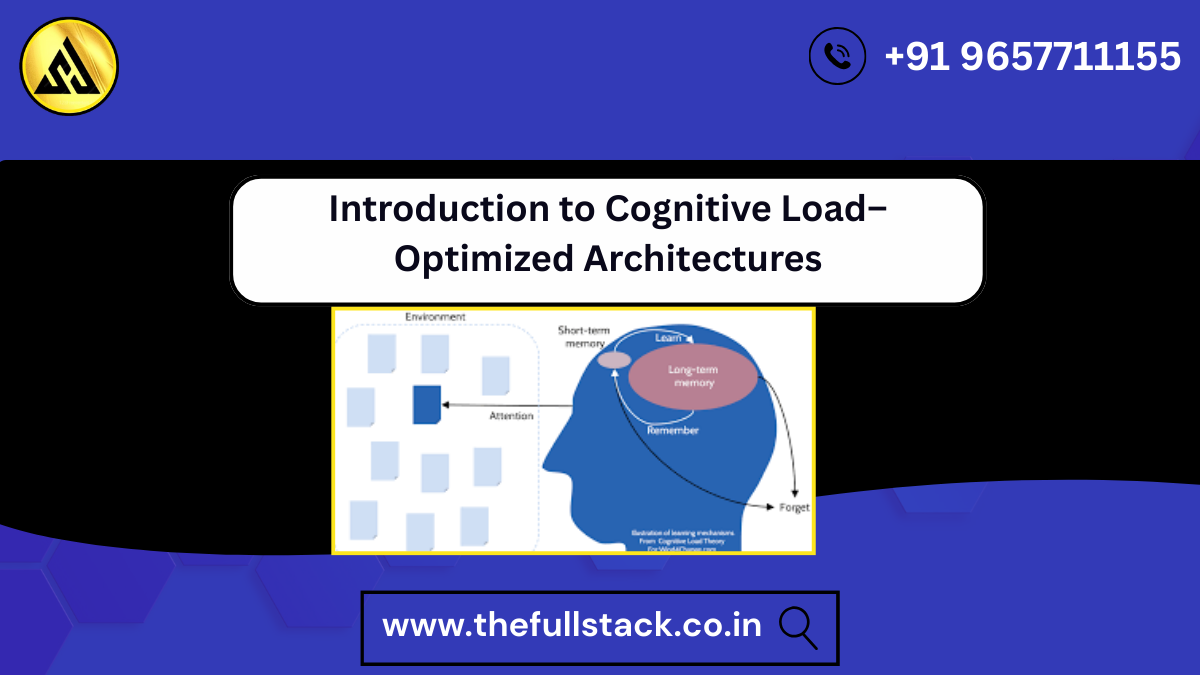
Introduction to Cognitive Load–Optimized Architectures
Modern software systems are powerful—but they are also increasingly complex. From cloud dashboards and enterprise tools to developer platforms and internal systems, users and engineers often struggle not because technology is weak, but because it is mentally exhausting to use.
This challenge has led to the rise of cognitive load–optimized architectures—design approaches that intentionally reduce the mental effort required to understand, use, and maintain systems.
For beginners, this means learning how to build systems that feel intuitive instead of overwhelming. For companies, it means higher productivity, fewer errors, and better user adoption. In this guide, we’ll explore what cognitive load–optimized architectures are, why they matter, and how they are shaping the future of software design.
What Is Cognitive Load?
Cognitive load refers to the amount of mental effort required to process information, make decisions, or complete tasks.
In simple terms:
It’s how “hard” your brain has to work to understand something.
When cognitive load is too high:
- Users feel confused or frustrated
- Developers struggle to maintain systems
- Mistakes become more common
Cognitive load–optimized architectures aim to minimize unnecessary mental effort while preserving functionality and flexibility.
What Are Cognitive Load–Optimized Architectures?
Cognitive load–optimized architectures are system designs that prioritize clarity, simplicity, and mental efficiency for both users and developers.
Instead of focusing only on performance or scalability, these architectures ask an important question:
“How easy is this system to understand and work with?”
They achieve this by:
- Reducing complexity at every layer
- Creating predictable patterns
- Presenting information progressively
- Aligning technical structure with human thinking
Why Cognitive Load–Optimized Architectures Are Gaining Importance
Software Complexity Is Increasing
Microservices, distributed systems, and cloud-native tools add power—but also complexity. Without optimization, systems become difficult to reason about.
User Experience Expectations Are Higher
Users now expect software to be intuitive, fast, and easy to learn. Confusing systems quickly lose adoption.
Developer Productivity Is a Business Priority
Companies realize that developer burnout and onboarding delays often come from poorly designed architectures.
Remote and Cross-Functional Teams
Clear, low-cognitive-load systems help distributed teams collaborate more effectively.
Core Principles of Cognitive Load–Optimized Architectures
Simplicity Over Cleverness
Clear and readable designs outperform overly complex solutions.
Example:
A straightforward API with predictable endpoints is easier to use than a highly abstract but confusing one.
Consistency and Predictability
Repeating patterns reduce mental effort.
Example:
Using the same naming conventions, data structures, and workflows across services.
Progressive Disclosure
Show only what’s necessary at each stage.
Example:
Advanced settings hidden until users need them.
Clear Separation of Concerns
Each component has a single responsibility.
Example:
Separating business logic, UI logic, and data access clearly.
Human-Centered Abstractions
Architectures should reflect how people think, not just how machines work.
Real-World Examples of Cognitive Load–Optimized Architectures
Frontend Applications
Modern UI frameworks reduce cognitive load by:
- Component-based design
- Clear state management
- Consistent UI patterns
Example:
Dashboards that guide users step-by-step instead of overwhelming them with data.
Backend and API Design
Well-designed APIs follow predictable structures.
Example:
RESTful APIs with clear resource naming and standardized responses.
Microservices Architecture
When optimized, microservices reduce cognitive load by:
- Clear service boundaries
- Well-defined contracts
- Strong documentation
When poorly designed, they increase confusion dramatically.
Internal Developer Platforms
Companies build internal tools that abstract infrastructure complexity, allowing developers to focus on features instead of operations.
Benefits for Beginners
Cognitive load–optimized architectures are especially valuable for beginners.
Faster Learning
Simple, consistent systems are easier to understand.
Reduced Errors
Clear structures reduce mistakes caused by confusion.
Higher Confidence
Beginners feel more capable when systems make sense.
Benefits for Companies and Teams
Improved Productivity
Developers spend less time figuring things out.
Faster Onboarding
New employees ramp up quickly.
Better System Reliability
Clear architectures are easier to debug and maintain.
Higher User Satisfaction
Users enjoy products that feel intuitive and calm.
Industry Trends Supporting Cognitive Load Optimization
Design-Driven Engineering
UX principles are influencing backend and system architecture decisions.
Platform Engineering
Internal platforms simplify complex infrastructure for developers.
AI-Assisted Development
AI tools help reduce cognitive load by suggesting patterns and catching errors early.
Documentation as a First-Class Citizen
Clear documentation is now part of architecture design, not an afterthought.
Common Mistakes to Avoid
Even with good intentions, teams can increase cognitive load by:
- Over-engineering solutions
- Introducing too many tools
- Ignoring documentation
- Prioritizing flexibility over clarity
Cognitive load–optimized architectures balance power with simplicity.
How Beginners Can Start Designing Cognitive Load–Optimized Systems
Start small and focus on fundamentals:
- Use clear naming conventions
- Keep components small and focused
- Follow established patterns
- Document decisions clearly
Good habits formed early lead to better architectures over time.
The Future of Cognitive Load–Optimized Architectures
As systems grow more complex, optimizing for human understanding will become critical.
Future trends include:
- AI-guided architecture design
- Self-documenting systems
- Adaptive interfaces based on user expertise
- Greater alignment between UX and system architecture
Cognitive load optimization will move from a best practice to a standard expectation.
Conclusion: Designing for the Human Mind
Cognitive load–optimized architectures represent a shift in how we think about system design. Instead of forcing people to adapt to complex systems, we design systems that adapt to how people think.
For beginners, this approach builds confidence and clarity. For organizations, it drives efficiency, quality, and long-term success. In a world of growing complexity, reducing cognitive load is not optional—it’s essential.
Call to Action
If you want to design systems that are powerful yet easy to understand, start learning cognitive load–optimized architectures today. Explore beginner-friendly guides, architecture patterns, and courses that help you build software with clarity and purpose.
YOU MAY BE INTERESTED IN
Table to check whether a business object has any GOS attachment or not
C++ Programming Course Online – Complete Beginner to Advanced

Leave a Reply