


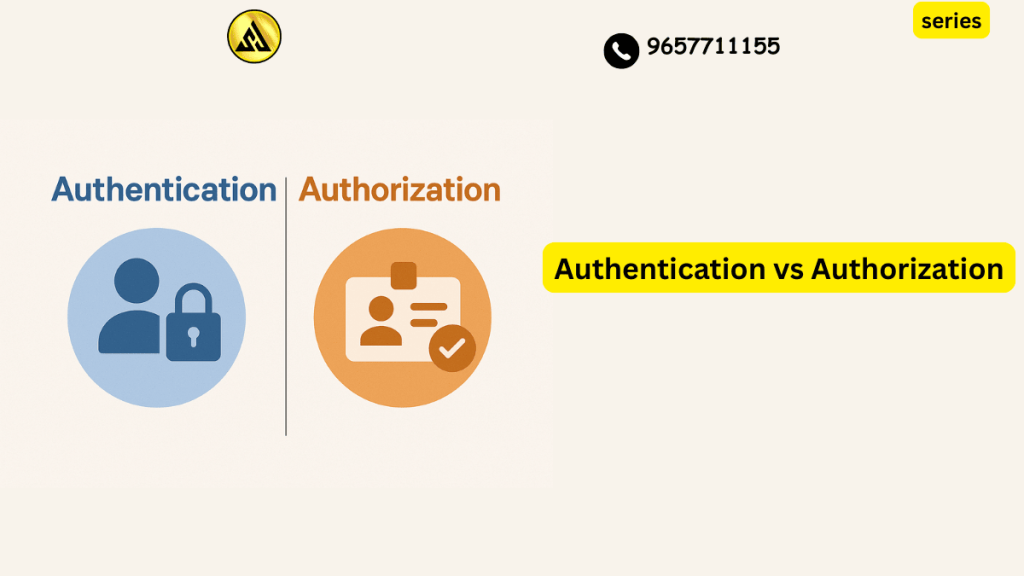
If you have ever built a login system, secured an API, or read a security audit report, you have probably run into two terms that sound almost identical but mean very different things: authentication and authorization. Developers, IT professionals, and even seasoned architects sometimes use these words interchangeably, and that small mistake can lead to serious security gaps in real applications. In this guide, we will break down exactly what authentication and authorization mean, how they work together, where they differ, and how you can implement both correctly in your systems.
📺 Recommended Video Tutorial: SAP FICO Complete Syllabus 2026 | FI & CO + S/4HANA | Full Course Roadmap
Watch our comprehensive video guide below for step-by-step SAP FICO (Financial Accounting & Controlling) concepts, roadmaps, and practical real-world demonstrations:

What Is Authentication?
Authentication is the process of verifying who a user is. When you enter your username and password on a website, or scan your fingerprint to unlock your phone, you are going through authentication. The system is trying to confirm that you are indeed the person you claim to be. Think of authentication as the ID check at the entrance of a building. The security guard looks at your ID card, compares your face to the photo, and confirms you are who you say you are. That is authentication in its simplest form.
Common Authentication Methods
There are several ways applications authenticate users today, and most modern systems use a combination of these methods to increase security.
Password based authentication remains the most common method, where users provide a username and password combination. While simple, it is also the weakest form of authentication if not paired with additional layers of protection.
Multi factor authentication, often called MFA, adds an extra step beyond the password. This could be a one time code sent to your phone, a biometric scan, or a hardware security key. MFA significantly reduces the risk of unauthorized access even if a password is stolen.
Biometric authentication uses physical characteristics like fingerprints, facial recognition, or voice patterns to verify identity. This method has become increasingly popular on smartphones and laptops because it is fast and difficult to replicate.
Token based authentication, commonly implemented using JSON Web Tokens or OAuth, is widely used in modern web and mobile applications. Instead of sending credentials with every request, the system issues a token after the initial login, and that token is used to verify identity for subsequent requests.
Single sign on, or SSO, allows users to authenticate once and gain access to multiple connected systems without logging in again for each one. This is common in corporate environments where employees need access to several internal tools.
What Is Authorization?
Authorization is the process of determining what an authenticated user is allowed to do. Once the system knows who you are, it needs to decide what resources you can access and what actions you can perform. Going back to the building analogy, authentication got you through the front door, but authorization determines which floors your keycard can access. Maybe you can enter the lobby and your own office floor, but not the executive suite or the server room.
Common Authorization Models
Different applications implement authorization in different ways depending on their complexity and security requirements.
Role based access control, known as RBAC, assigns permissions based on a user’s role within an organization. For example, an admin role might have full access to a system, while a standard user role only has access to their own data. This is one of the most widely used authorization models because it is simple to manage at scale.
Attribute based access control, or ABAC, goes a step further by making access decisions based on multiple attributes such as department, location, time of day, or device type. This model offers more granular control but requires more complex configuration.
Access control lists, commonly called ACLs, define specific permissions for individual users or groups on specific resources. This is often used in file systems and databases where fine grained control is necessary.
Policy based access control uses centrally defined policies to determine access, which is especially useful in large organizations that need consistent rules applied across many systems and applications.
Authentication vs Authorization: The Core Differences
The easiest way to remember the difference is this simple phrase. Authentication asks who are you, while authorization asks what are you allowed to do. Authentication always happens first because a system needs to confirm your identity before it can decide what you are permitted to access. Authorization happens second and relies on the result of authentication to make its decisions.
Another key difference lies in what each process protects against. Authentication protects against impersonation, ensuring that someone cannot pretend to be another user. Authorization protects against privilege escalation, ensuring that even legitimate users cannot access resources or perform actions beyond their assigned permissions.
From a technical standpoint, authentication typically involves credentials such as passwords, biometrics, or tokens, while authorization typically involves permissions, roles, and policies stored in a database or configuration file. Authentication is usually a one time event per session, while authorization is checked continuously every time a user attempts to access a resource or perform an action.
Why Both Are Critical for Application Security
A common mistake in system design is focusing heavily on authentication while neglecting authorization, or vice versa. Strong authentication without proper authorization means a hacker who steals valid credentials could gain unrestricted access to everything in the system. On the other hand, strong authorization without proper authentication means the system might correctly limit permissions, but it cannot verify if the person requesting access is actually who they claim to be in the first place.
Real world security breaches often occur at the intersection of these two processes. A famous example involves broken access control vulnerabilities, which consistently rank among the top security risks identified by the Open Web Application Security Project, commonly known as OWASP. These vulnerabilities typically happen when authorization checks are missing or improperly implemented, allowing authenticated users to access data or perform actions they should not be permitted to.
Real World Example
Imagine an online banking application. When you log in with your username and password, that is authentication confirming you are the account holder. Once logged in, you should only be able to view and manage your own accounts, not someone else’s. If the application fails to properly check authorization and only relies on authentication, a malicious user could potentially manipulate account numbers in the URL or API request to view other customers’ financial data, even though they were properly authenticated. This type of vulnerability, known as an insecure direct object reference, has caused real financial and reputational damage to companies in the past.
How Authentication and Authorization Work Together
In a well designed system, authentication and authorization work as a two step verification process for every meaningful action a user takes. First, the system authenticates the user during login, confirming their identity and often issuing a session token or access token. Second, every time the user tries to access a resource, whether it is viewing a profile page, downloading a file, or calling an API endpoint, the system checks the authorization rules tied to that authenticated identity.
Modern authentication and authorization frameworks like OAuth 2.0 and OpenID Connect have become industry standards precisely because they separate these two concerns cleanly. OpenID Connect handles the authentication layer, confirming user identity, while OAuth 2.0 handles the authorization layer, controlling what scopes and permissions an application or user has been granted.
Best Practices for Implementing Authentication and Authorization
Implementing these two processes correctly requires careful planning and adherence to established security principles. Below are practical tips that development teams and IT professionals can apply immediately.
Always enforce the principle of least privilege, which means users and applications should only be granted the minimum level of access necessary to perform their tasks. This limits the potential damage if credentials are ever compromised.
Implement multi factor authentication wherever possible, especially for administrative accounts and systems that handle sensitive data. This single step can prevent the majority of account takeover attempts.
Never rely on client side checks alone for authorization. All authorization decisions must be enforced on the server side, because client side restrictions can easily be bypassed by anyone with basic technical knowledge.
Use short lived tokens with refresh mechanisms instead of long lived sessions. This reduces the window of opportunity if a token is stolen or leaked.
Regularly audit roles and permissions across your systems. Over time, users accumulate access rights they no longer need, a problem often referred to as privilege creep. Periodic reviews help identify and remove unnecessary access.
Log and monitor both authentication and authorization events. Failed login attempts, unusual access patterns, and repeated authorization failures can all be early indicators of a security incident.
Choose established, well tested frameworks and libraries for implementing authentication and authorization rather than building custom solutions from scratch. Security is notoriously difficult to get right, and using proven standards like OAuth 2.0, OpenID Connect, or SAML reduces the risk of introducing vulnerabilities.
Authentication vs Authorization in Modern Cloud Environments
As organizations move more of their infrastructure to the cloud, the relationship between authentication and authorization has become even more important. Cloud platforms like AWS, Microsoft Azure, and Google Cloud all provide identity and access management services that handle both processes, but they are configured separately for good reason.
Identity providers such as Okta, Azure Active Directory, and Auth0 have become popular because they centralize authentication across multiple applications, allowing organizations to enforce consistent security policies. Meanwhile, authorization is often managed through cloud native tools like AWS Identity and Access Management policies or Azure role assignments, which define exactly what actions a verified identity can take on specific resources.
This separation of concerns is considered a best practice in modern system architecture because it allows security teams to update authentication methods, such as rolling out new MFA requirements, without having to touch the authorization logic that controls resource permissions, and vice versa.
Conclusion
Authentication and authorization are two distinct but deeply connected pillars of application security. Authentication confirms identity, answering the question of who you are, while authorization controls access, answering the question of what you are allowed to do. Understanding this distinction is not just an academic exercise, it is fundamental to building secure applications that protect user data and prevent unauthorized access. Whether you are a developer building your first login system or an architect designing enterprise level access control, getting both authentication and authorization right, and implementing them as separate, well tested layers, will significantly strengthen your overall security posture.
Frequently Asked Questions
What is the main difference between authentication and authorization?
Authentication is the process of verifying the identity of a user, while authorization is the process of determining what actions a user can perform. Understanding the difference between these two concepts is crucial for building secure and functional systems. This distinction helps ensure that users can only access the resources and data they are permitted to.
Why is authentication important in the context of security?
Authentication is essential because it ensures that only legitimate users can access a system, application, or network. By verifying the identity of users, authentication helps prevent unauthorized access, which can lead to data breaches, theft, or other malicious activities. Effective authentication mechanisms are critical for protecting sensitive information and maintaining system integrity.
How does authorization work after a user has been authenticated?
After a user has been authenticated, authorization determines what actions they can perform based on their role, permissions, or access level. This involves checking the user’s credentials against a set of policies or rules that define what resources they can access, what data they can view or modify, and what actions they can take. Authorization ensures that users can only perform actions that are consistent with their assigned roles or permissions.
Can you give an example of how authentication and authorization work together in a real-world scenario?
In a banking system, authentication verifies the identity of a user through their login credentials, while authorization determines what actions they can perform, such as viewing account balances, transferring funds, or paying bills. For instance, a customer may be authenticated to access their account, but authorization limits their ability to perform certain actions, such as accessing another user’s account information. This combination of authentication and authorization ensures that users can only access and manipulate their own data.
What are the consequences of confusing authentication and authorization?
Confusing authentication and authorization can lead to significant security risks, including unauthorized access to sensitive data, elevation of privileges, and exploitation of vulnerabilities. Failing to distinguish between these two concepts can result in poorly designed systems that are vulnerable to attacks, compromising the confidentiality, integrity, and availability of data and resources. This can have serious consequences, including financial losses, reputational damage, and legal liabilities.