
CRUD Operations
CRUD Operations Explained
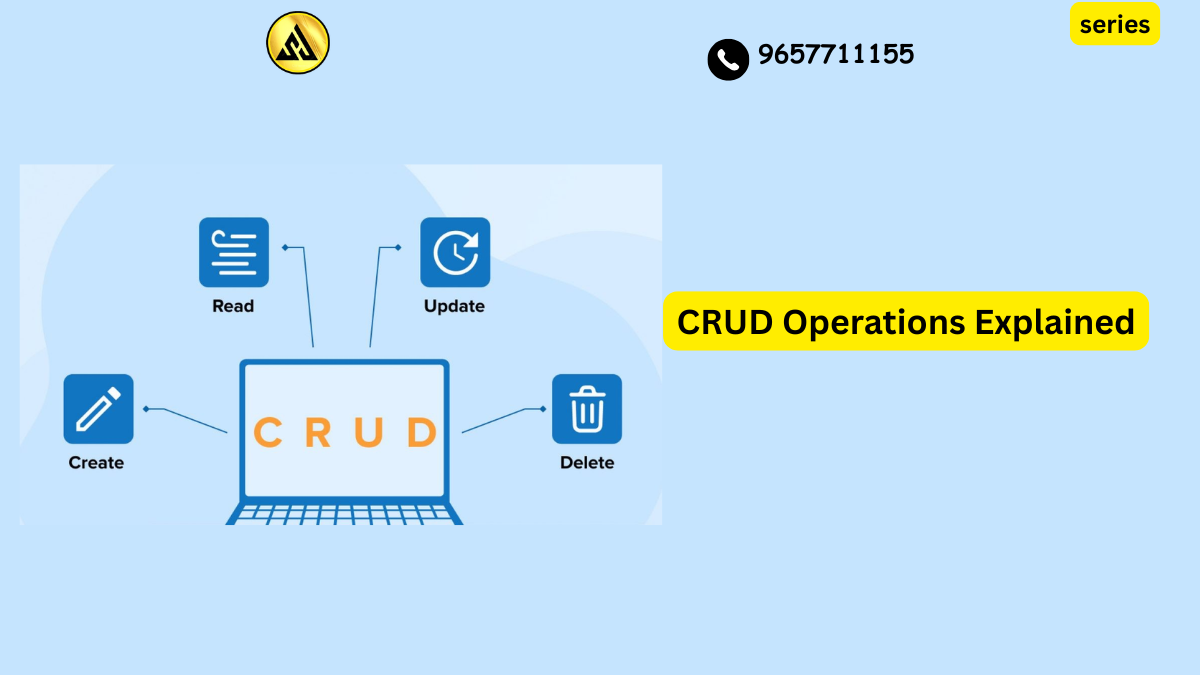
If you have ever built anything that stores data, you have already used CRUD. Maybe you built a simple to do list app. Maybe you worked on a massive enterprise system. Either way, CRUD was there, even if nobody used that word. CRUD stands for Create, Read, Update, and Delete. These four actions cover almost everything an application does with data. Once this idea clicks, you start noticing the same pattern everywhere, from your banking app to your favorite social media platform.
This article breaks down what CRUD operations mean and why they matter. You will see how they connect to real technologies like databases and APIs. You will also learn how to apply this knowledge in your own projects. Whether you are a student just starting out or a professional brushing up on the basics, this guide keeps things simple and practical.
What Does CRUD Actually Mean
CRUD describes four basic functions that any storage system needs. Persistent storage means data that stays around after you close the app. Think of a database, a file, or cloud storage. Here is what each letter means.
Create means adding new data. Picture signing up for a new account on a website. The moment you hit submit, the app creates a new user record.
Read means retrieving data that already exists. When you log back in and see your profile, the app is reading stored data.
Update means changing data that already exists. If you change your email or profile picture, that is an update.
Delete means removing data for good. If you close your account, the app deletes your record. Some systems mark it inactive instead of removing it completely.
These four operations sound simple, but they form the backbone of nearly every app you use. Your inbox relies on them. Your ride sharing app relies on them. Even this blog post relies on them behind the scenes.
Why CRUD Operations Matter So Much
Some people think CRUD is a beginner topic you eventually outgrow. That is not quite right. CRUD is a foundational pattern. It shapes how you design databases, build APIs, and structure entire applications.
Understanding CRUD deeply changes the questions you ask. Should this delete be soft or permanent? Should this update trigger a notification? Does this create action need validation first? Good developers ask these questions early, and CRUD is where that thinking starts.
CRUD also gives teams a shared language. When someone says a feature needs full CRUD support, everyone understands instantly. Users need to add records, view them, edit them, and remove them.
How CRUD Maps to Real World Technology
CRUD is a concept, but the implementation changes depending on your tech stack. Here are a few common examples.
CRUD in SQL Databases
Relational databases like MySQL, PostgreSQL, and SQL Server map CRUD directly to SQL commands. INSERT handles create. SELECT handles read. UPDATE handles update. DELETE handles delete.
Picture an online bookstore with a table called books. Adding a new title triggers an INSERT. Browsing the catalog triggers a SELECT. Changing a price triggers an UPDATE. Removing a discontinued book triggers a DELETE.
CRUD in REST APIs
REST APIs map CRUD onto HTTP methods in a clean way. POST handles create. GET handles read. PUT or PATCH handles update, where PUT replaces a whole resource and PATCH changes just a few fields. DELETE removes a resource.
Say you are building a task management app. Creating a task might hit POST slash tasks. Fetching tasks might hit GET slash tasks. Updating one might hit PATCH slash tasks slash task id. Removing one might hit DELETE slash tasks slash task id.
CRUD in NoSQL Databases
NoSQL databases like MongoDB follow the same logic with different syntax. insertOne handles create. find handles read. updateOne handles update. deleteOne handles delete. The syntax looks different, but the underlying idea stays the same. This is exactly why CRUD works across so many database types.
A Practical Example: Building a Simple Notes App
Let us walk through a real example. Imagine a basic notes app where users jot down quick thoughts.
Saving a new note triggers a create operation. The app stores the text, a timestamp, and a unique ID.
Opening the app and viewing saved notes triggers a read operation. The app pulls every note tied to that user account.
Editing an existing note triggers an update operation. The app swaps the old text for the new text while keeping the same note ID.
Swiping to delete a note triggers a delete operation. The app removes that note from storage for good.
These four operations cover everything a user can do with their notes. Nothing else is needed. That is exactly why CRUD has stayed the standard framework for decades, and it will likely stay relevant for many more.
Common Mistakes Developers Make With CRUD
CRUD sounds simple, but a few common pitfalls trip up newer developers.
Skipping Validation on Create and Update
Letting users submit data without checking it first causes problems fast. An empty email field or a negative price value can corrupt your data. Always validate input before it reaches your database.
Using Hard Deletes When Soft Deletes Make More Sense
A hard delete removes data permanently with no way back. A soft delete marks a record as inactive while keeping it in the database. Financial records, user accounts, and other sensitive data usually call for soft deletes. They let you recover from mistakes and keep an audit trail.
Not Handling Concurrent Updates
Picture two people editing the same document at once. Without proper handling, one person’s changes can silently overwrite the other’s. Many systems solve this with version control or locking mechanisms to prevent data loss during simultaneous edits.
Overcomplicating Read Operations
Some developers write overly complex queries for simple lookups. This slows everything down. Read operations happen more often than any other CRUD action, so it pays to keep them fast and simple.
Best Practices for Implementing CRUD Effectively
Here are some practical tips that genuinely improve CRUD based systems.
Keep your API endpoints consistent and predictable. Future developers, including future you, will thank you for it.
Return meaningful responses after every operation. A create request should return the new object and its ID. A delete request should confirm the removal clearly.
Build proper error handling into every CRUD operation. What happens if someone tries to update a record that no longer exists? What happens if a required field is missing during create? Thinking through these edge cases early saves real debugging time later.
Log your create, update, and delete operations. These actions change your data, so they are the most valuable ones to track when something breaks.
Think carefully about access control. Not every user should perform every operation on every record. A regular user should not be able to delete someone else’s account. Permission checks need to wrap around your CRUD logic.
CRUD and Modern Application Architecture
Applications have grown more complex, but CRUD has stayed relevant through all of it. Frameworks like Django, Ruby on Rails, Laravel, and Express often generate CRUD functionality through scaffolding tools. This frees developers to focus on business logic instead of rewriting the same insert and select statements.
Newer patterns build directly on CRUD thinking too. CQRS, short for Command Query Responsibility Segregation, separates read operations from write operations for better scalability. This split shows that CRUD is not something you leave behind. It is a foundation that more advanced patterns continue to build on.
Final Thoughts
CRUD operations look like a simple four letter acronym, but they represent one of the most important ideas in software development. Every app that stores and manages data comes down to creating, reading, updating, and deleting information, no matter how complex it seems on the surface. Once this pattern clicks, database design gets easier. API building gets easier. Debugging gets easier too.
Whether you are just starting out or you have years of experience, mastering CRUD gives you a lens for understanding almost any application. The next time you sign up for an account, edit a profile, or delete an old email, take a moment to notice the CRUD operations quietly working behind the scenes.
Frequently Asked Questions
What do CRUD operations stand for?
CRUD operations stand for Create, Read, Update, and Delete, which are the four basic functions used to manage data in a database. These operations are used to interact with data in a database, allowing users to add, view, modify, and remove data as needed. Understanding CRUD operations is essential for working with databases and building data-driven applications.
Why are CRUD operations important in software development?
CRUD operations are important in software development because they provide a standard way to interact with data in a database, making it easier to build and maintain data-driven applications. By using CRUD operations, developers can ensure that their applications are scalable, secure, and efficient, and that data is handled consistently and reliably. This, in turn, helps to reduce errors and improve the overall quality of the application.
How do CRUD operations relate to database management?
CRUD operations are closely related to database management, as they provide the basic functions for managing data in a database. Create operations are used to add new data to the database, Read operations are used to retrieve data, Update operations are used to modify existing data, and Delete operations are used to remove data from the database. By using CRUD operations, database administrators can manage data effectively and ensure that the database remains up-to-date and accurate.
Can CRUD operations be used with any type of database?
Yes, CRUD operations can be used with any type of database, including relational databases, NoSQL databases, and graph databases. The specific implementation of CRUD operations may vary depending on the database management system being used, but the basic principles of Create, Read, Update, and Delete remain the same. This makes CRUD operations a versatile and widely applicable concept in database management.
Are CRUD operations used in real-world applications?
Yes, CRUD operations are widely used in real-world applications, including web applications, mobile apps, and enterprise software systems. Examples of applications that use CRUD operations include social media platforms, e-commerce websites, and customer relationship management systems. By using CRUD operations, developers can build applications that are data-driven, interactive, and scalable, and that provide a range of features and functionality to users.
