
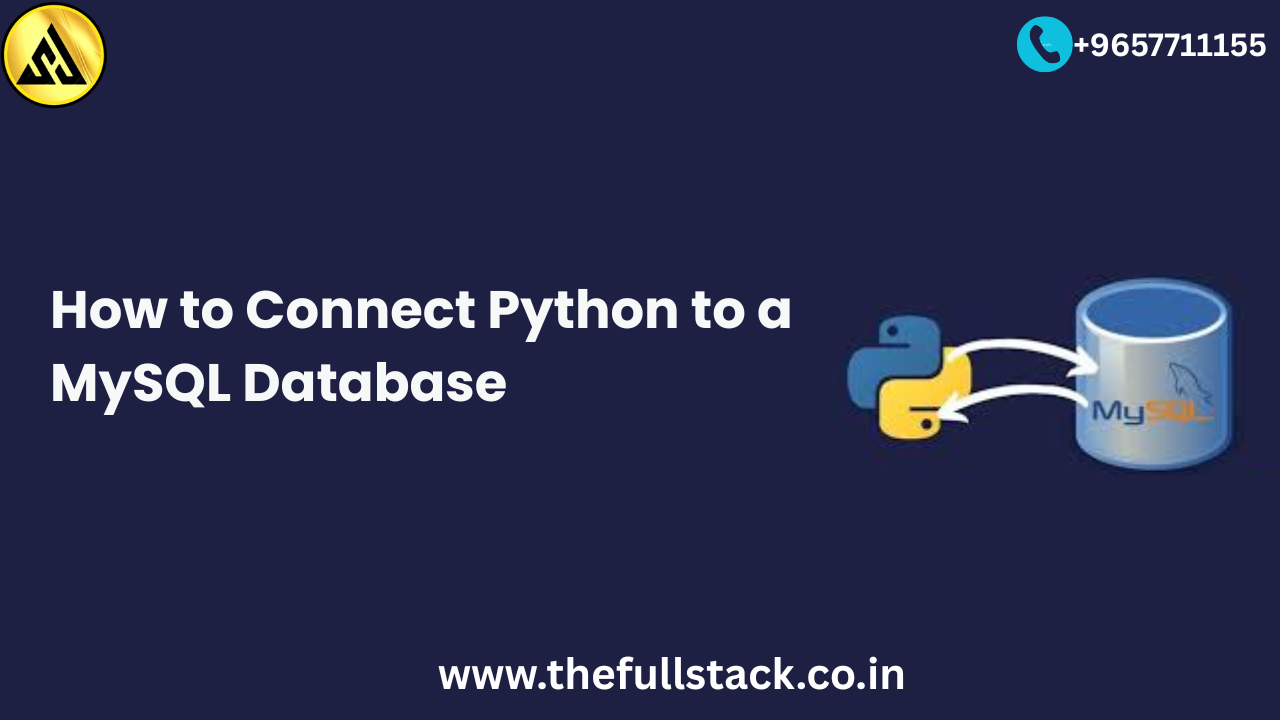
How to Connect Python to a MySQL Database
Working with databases is a crucial skill in backend development, data analysis, and automation. One of the most common databases you’ll encounter is MySQL, and Python makes it simple to connect, query, and manipulate data using libraries like mysql-connector-python.
In this beginner-friendly guide, you’ll learn how to connect Python to a MySQL database, run SQL commands, and manage data effectively.
Why Use Python with MySQL?
- Automate database tasks
- Build web apps with data storage
- Perform data analysis directly from databases
- Easily integrate with frameworks like Flask or Django
Step 1: Install the MySQL Connector
To connect MySQL with Python, install the official MySQL connector library:
bash
Copy code
pip install mysql-connector-python
Step 2: Connect to the Database
python
Copy code
import mysql.connector
connection = mysql.connector.connect(
host=”localhost”,
user=”your_username”,
password=”your_password”,
database=”your_database”
)
print(“Connection successful!”)
Replace your_username, your_password, and your_database with your actual MySQL credentials.
Step 3: Create a Cursor and Execute Queries
python
Copy code
cursor = connection.cursor()
cursor.execute(“SELECT * FROM employees”)
for row in cursor.fetchall():
print(row)
This retrieves all rows from the employees table.
Step 4: Insert Data into a Table
python
Copy code
query = “INSERT INTO employees (name, department) VALUES (%s, %s)”
values = (“Alice”, “HR”)
cursor.execute(query, values)
connection.commit()
print(“Data inserted successfully!”)
Always call commit() to save changes to the database.
Step 5: Close the Connection
python
Copy code
cursor.close()
connection.close()
This ensures all resources are properly released.
Error Handling Example
python
Copy code
try:
connection = mysql.connector.connect(
host=”localhost”,
user=”root”,
password=”pass”,
database=”company”
)
print(“Connected to database!”)
except mysql.connector.Error as err:
print(f”Error: {err}”)
Handling exceptions is a best practice in real-world applications.
Practice Challenge
Write a script that:
- Connects to a MySQL database
- Creates a new table
- Inserts sample data
- Queries and prints the data
This will help reinforce your learning and test your understanding
Why It Matters
Connecting Python to MySQL unlocks your ability to:
- Build full-stack applications
- Analyze production data
- Automate backend workflows
- Collaborate with teams using real-world databases
Learn More and Grow Your Skills
Ready to take your Python skills to the next level with real-world projects?
📚 Start now with structured learning paths and mentorship at
👉 https://www.thefullstack.co.in/courses/
You also like this:
What is Backend Development? A Complete Guide for Beginners [2025]
How Can SAP ERP Be Beneficial
What Are the Most Popular Backend Development Languages in 2025?
Frequently Asked Questions
What libraries do I need to connect Python to a MySQL database?
To connect Python to a MySQL database, you will need to install the mysql-connector-python library, which can be installed using pip. This library provides a standard database API for Python and allows you to execute SQL queries and retrieve data from your MySQL database. You can install it by running pip install mysql-connector-python in your terminal.
How do I import the MySQL library in my Python script?
To use the mysql-connector-python library in your Python script, you need to import it using the import statement. You can import it by adding import mysql.connector at the beginning of your script. This will allow you to use the library’s functions and classes to connect to your MySQL database.
What is the correct syntax to establish a connection to a MySQL database in Python?
The correct syntax to establish a connection to a MySQL database in Python is by using the connect() function from the mysql.connector library, which returns a connection object. You need to pass the database hostname, username, password, and database name as parameters to this function. The syntax is: cnx = mysql.connector.connect(user=’username’, password=’password’, host=’hostname’, database=’database_name).
How do I handle errors when connecting to a MySQL database in Python?
To handle errors when connecting to a MySQL database in Python, you can use a try-except block to catch any exceptions that may occur during the connection process. You can use the try block to attempt to establish a connection and the except block to handle any errors that may occur, such as authentication errors or network errors. This will allow your script to continue running even if an error occurs.
How do I close a connection to a MySQL database in Python?
To close a connection to a MySQL database in Python, you need to use the close() method of the connection object. This will release any system resources associated with the connection and prevent any further queries from being executed. You should always close the connection when you are finished using it to avoid resource leaks and improve performance.

Leave a Reply